 Italiano
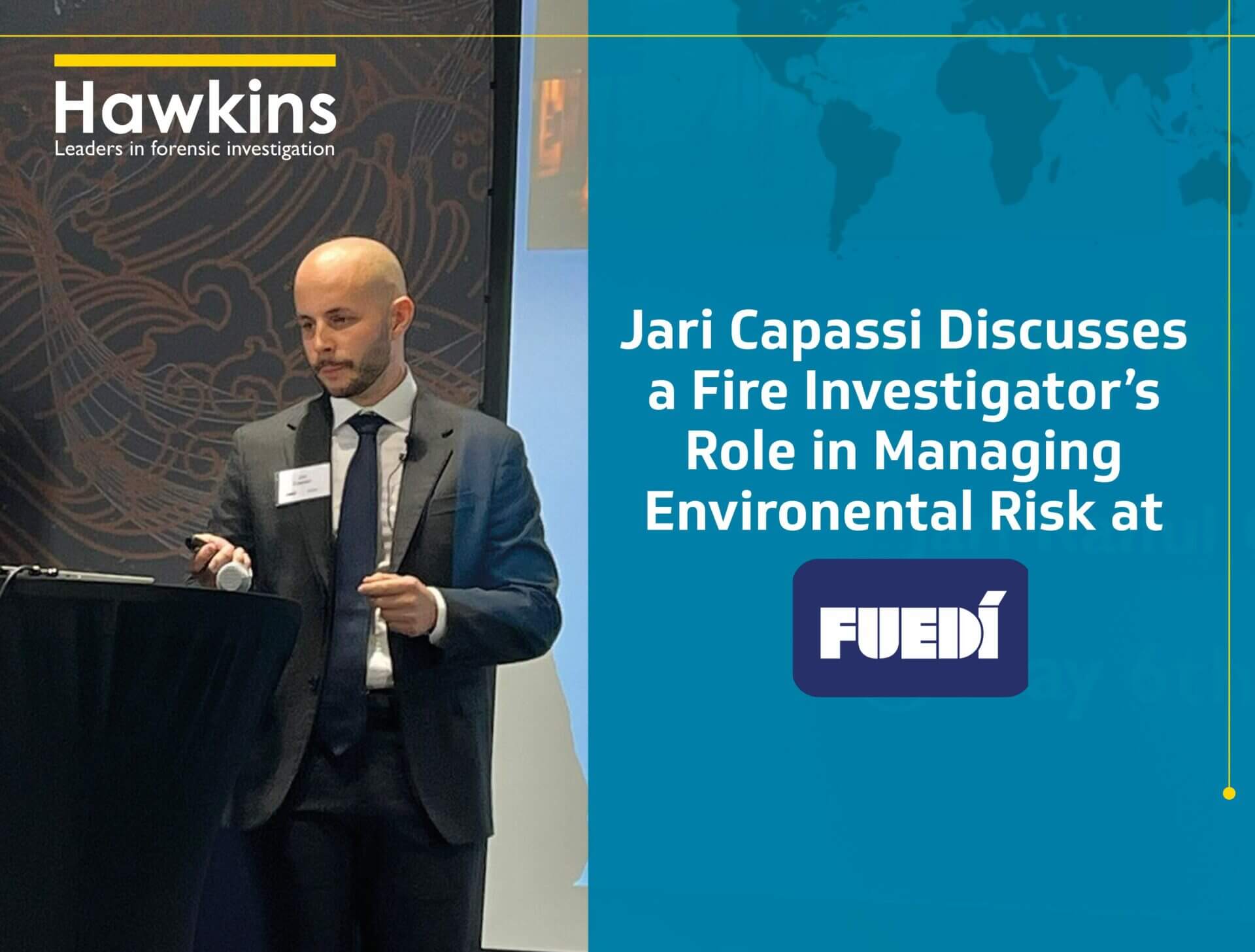

Hawkins was pleased to attend the FUEDI conference in Rotterdam, where Forensic Engineer Jari Capassi delivered an engaging presentation. During the session, Jari highlighted Hawkins’ extensive capabilities in fire investigation, showcasing our multidisciplinary approach in determining the root causes of complex fire incidents, whilst addressing the environmental impact they can also bring.
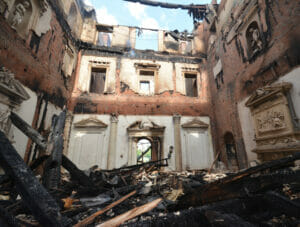
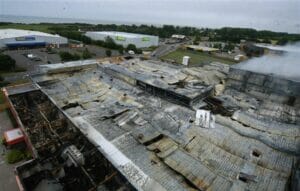
Every fire releases significant quantities of carbon dioxide (CO₂), toxic gases, soot, and particulate matter into the atmosphere, directly contributing to greenhouse gas emissions, environmental contamination, and global warming.
Traditionally, fire investigations have focused on determining the origin and cause of an incident for legal, insurance, or operational purposes. Today, however, forensic engineering is evolving into something broader: a strategic tool capable of driving loss prevention and reducing the environmental impact of fires.
Every fire investigation provides important technical data. Through the reconstruction of the ignition sequence, the analysis of fire development and spread, and the identification of the mechanisms that allowed escalation, investigators can identify systemic weaknesses within facilities and organisations. These may include:
- Inadequate maintenance practices
- Failures in compartmentation
- Insufficient fire protection systems
- Design vulnerabilities
- Operational inefficiencies
all of which increase both the likelihood and severity of fire events.
Large-scale industrial fires, particularly those involving hydrocarbons, chemicals, plastics, or energy infrastructure, can generate significant emissions of greenhouse gases within a very short period of time. Reducing the frequency and severity of such events therefore has a clear environmental benefits.
This is where the transition from fire investigation to loss prevention becomes strategically important. Lessons learned from forensic fire investigations can be translated into concrete engineering and operational improvements, including:
- Enhancement of active and passive fire protection systems;
- Improvement of inspection and maintenance procedures;
- Strengthening of process safety practices;
- Identification and mitigation of escalation risks;
- Optimisation of emergency response strategies;
- Improvement of compartmentation and fire containment measures.
In high-risk sectors such as chemical, energy, manufacturing, logistics, and heavy industry, these measures can significantly reduce the probability of catastrophic events and their environmental consequences. Furthermore, the integration of forensic investigation and risk engineering enables organisations to develop a more predictive and preventive safety culture.
By identifying recurring failure patterns and maintenance deficiencies, companies can intervene before vulnerabilities evolve into major incidents. In this context, fire investigation becomes an integral part of a broader sustainability strategy. This formed the core theme of Jari’s presentation at the FUEDI conference, as well as insights into how Hawkins applies this approach to support clients, reduce risk, and contribute to more sustainable outcomes across the industries we serve.
Jari was joined by Graeme Drysdale, Hawkins’ Business Development Manager, who brings over four decades of experience in the insurance and loss adjusting industry. A Fellow of the Chartered Institute of Loss Adjusters (FCILA) and Chartered Insurer, Graeme has handled major loss claims across the UK and global markets. His deep understanding of the insurance landscape and commitment to education, evidenced by his role on the CILA Liability SIG committee, makes him highly effective in bridging technical expertise with client needs