Noise is a key consideration during the planning process. You may be asked to provide a noise assessment if a development could be affected by existing noise sources, generate noise itself, or introduce noise-sensitive uses.
The assessment required will depend on the type of development and may vary between local authorities but could include a background and ambient noise assessment, an analysis of noise transfer, and an assessment to BS 4142 or BS 8233.
Whether you are proposing a new residential development, commercial development, applying for change of use, or the installation of new mechanical plant, such as condensers, chillers or air source heat pumps (ASHPs), Hawkins can provide clear, proportionate, and practical advice to satisfy local planning requirements and keep your project moving forward.
Speak to our team today to discuss your noise impact assessment including noise surveys, BS 4142 assessments, and BS 8233 assessments.
Every project is different, but a typical assessment may include:
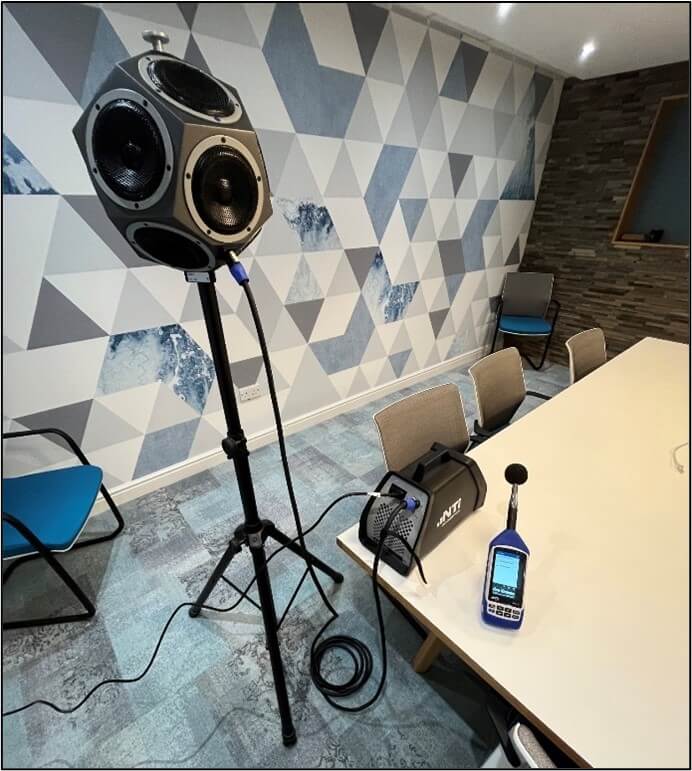

We normally recommend several days of monitoring to establish representative acoustic conditions, although the exact requirements will depend on the development and local authority expectations.
Once the monitoring is complete, we will create a report you can use to support your planning application.
With acoustics consultants covering the whole of the UK, we can quickly be on site, ensuring your project keeps moving.
Early advice from an acoustics expert will help you identify potential problems, assess planning risk, and develop practical mitigation measures before they become obstacles to consent.
Our acoustics consultants regularly support:


Hawkins is an employee-owned multidisciplinary consultancy with more than 150 experts across the UK, Ireland, Europe, the Middle East, Africa and Asia. Our acoustics specialists provide everything from routine planning noise assessments to complex acoustic investigations and expert witness services.
If you require a planning noise assessment whether to BS 4142 or BS 8233, our acoustics consultants can help.
Call: +44 207 481 4897
Email: [email protected]
Website: www.hawkins.biz
BS 4142 is one of the most commonly requested acoustic assessments for planning applications involving commercial or industrial noise sources.
Typical projects include:
BS 8233 is a broad standard relating to acoustics in buildings. It provides useful noise limits for residential properties and other noise-sensitive buildings. Acousticians use it when assessing noise impact from existing sources, such as roads and railway lines, on new residential or noise-sensitive property. When there is a planning application for a new property, the local authority will frequently request a noise assessment demonstrating that the noise levels from existing sources will be adequately controlled.
For example, a new residential property might have a bedroom overlooking a high street. The noise assessment would need to demonstrate that the building façade, including any glazing and ventilators, offer enough resistance to sound that the new residents can sleep.
Such assessments normally apply to new residential property, healthcare facilities and schools. For schools BB93 – Acoustic Design of Schools also applies.
Acoustic considerations can become a determining factor where noise impact has not been adequately assessed or mitigated. Identifying potential issues at an early stage allows proportionate mitigation to be incorporated into the design and planning strategy before they become obstacles to consent.
The requirements vary depending on the wording of the condition but may include acoustic assessments, plant specifications, façade or enclosure performance calculations, noise modelling, mitigation details or post-completion verification testing. It is not uncommon for local authorities to require evidence that airflow has also been considered in the mitigation strategy. Hawkins can prepare the necessary technical evidence and coordinate with project teams to facilitate discharge.
Yes. Acoustic evidence is frequently relied upon during planning appeals where noise forms part of the disputed issues. A robust assessment can help demonstrate that acoustic impacts have been properly evaluated and addressed through design or mitigation.
Yes. For environmental acoustics Hawkins supports clients involved in planning disputes, enforcement investigations, statutory nuisance matters and other situations where independent acoustic evidence is required. Within the built environment, we provide expert evidence related to planning, nuisance, sound insulation (privacy) performance, room acoustics, and construction failures. We also provide evidence in cases related to personal injury, including noise induced hearing loss, acoustic shock, and injury due to the inaudibility of warning signals. Our assessments are designed to provide clear, objective and technically robust advice.



 Italiano