


 Italiano
How we can help
Solutions to meet your objectives
At Hawkins, our aim is to provide technical and scientific assistance to our clients, whilst being approachable and remaining commercially aware. The following list provides examples of issues we regularly deal with, but please contact us if you would like to discuss specific requirements.

Cover and repudiation
Since the beginning, we investigated all types of incidents to assist our clients making tough decisions.
This can include whether a policy is applicable to a claim, whether warranties apply, how the claim has arisen, and if there is any third-party negligence involved.
Defending third party claims
Our experts are familiar with working for both Claimants and Defendants.
With our depth and breadth of knowledge on a wide range of subjects, we can investigate third party claims and review the accuracy of other expert findings and reports. Many of our experts have worked in the field and can provide insight on common practises, guidance, and legislation.
Fraud identification
With a vast range of knowledge and experience, our experts are adept at the identification and investigation of potential fraudulent cases.
Their evidence gathering and swift reporting can assist to help clients make decisions regarding cover and if necessary criminal proceedings.
Quantum
Our experts are experienced in providing headline costs for repair, mitigation, or alternative solutions.
We can also review the claimed quantum, to check it is reasonable. For example, one of our civil engineers was able to estimate the costs in a foundation dispute, showing that the Defendant’s method was not the only viable option at that price, and so the Claimant’s full claim was justified.
Recovery
We can assist with identifying third parties, who might be liable for your incident, and determining whether a recovery might be possible.
Our experts are trained as expert witnesses and can provide support to a case throughout a recovery process if required.
Risk assessment & management
Hawkins takes a realistic, common-sense approach when assisting our clients to identify and implement practicable steps to reduce risks on their sites.
Having experience of what can go wrong allows us a unique perspective when advising our clients to help prevent similar losses occurring in the future.
COMMON RELATED QUESTIONS
GENERAL
All our experts receive working at height and confined space training. In addition, we have several licensed drone operators, allowing us to reach difficult areas safely, which might be totally inaccessible otherwise, examples of this include sink holes, or buildings at risk of collapse.
Hawkins’ reports are tailored to meet the requirements of our clients. For domestic insurance claims, a brief screening service report after the site visit may be sufficient. If the investigation requires a more detailed investigation, i.e. involving laboratory examination or reviewing documents and records, then a Preliminary Appraisal report is provided. For litigation cases, Hawkins can prepare a full expert report that is compliant with part 35 of the Civil Procedure Rules.
Absolutely. Our investigations often uncover crucial historical information such as aerial and satellite imagery, documents submitted with planning and building control applications, records from public authorities, news reports and archived manufacturer’s installation and maintenance manuals.
FIRE
Whilst there are situations where an investigation will not be viable, often more evidence remains than might be obvious to the untrained eye. For example, in the past our experts have been able to find traces of petrol in a room that appears to have been burnt out, or they have recovered components from a faulty dishwasher in a warehouse that had been reduced to a shell. We’re always happy to offer free advice and will tell you quickly if a building has sustained too much damage for an investigation to be possible.
Hawkins has over 40 years of experience in fire investigations, determining where and how a fire started. Using principles of fire spread, an understanding of fire behaviour and other techniques such as arc mapping and electrical fuse operation, we can create a picture of the sequence of events, allowing us to identify the seat of the fire and the likely causes.
ESCAPES OF FLUID
Yes. We regularly investigate escape‑of‑water, gas or fluid incidents after emergency repairs have been carried out. If the original fitting or pipe section has been removed and retained, this provides the best evidence. However, even when repairs have been completed, we can often examine the repaired components in the laboratory to identify how the failure originally occurred.
Any photographs taken of the failed joint before the repair can also help support the investigation.
Yes. We assess both the physical evidence and the wider context, including the system’s maintenance history and how it was being used. Indicators such as unusual damage patterns, inconsistent failure mechanisms, or discrepancies in reported timelines can suggest negligence or intentional damage. Laboratory analysis provides objective, evidential support for these findings.
Often, yes. Detailed examination allows us to determine whether the issue resulted from incorrect installation, a manufacturing defect, or external factors such as freezing, corrosion or chemical attack. We compare the evidence with recognised industry standards and manufacturer specifications.
Laboratory examination can reveal features that are not visible during a site inspection, including fracture patterns, corrosion products, manufacturing defects or evidence of stress or fatigue.
Where appropriate, we can also create a laboratory-made joint using the incident fitting or an exemplar fitting to test its performance under water pressure and replicate the failure mode.
Yes. Working alongside contractors can be very effective. Ideally, a forensic investigator should photograph and examine the leak location before repairs begin. However, we can also remove and retain any parts that are replaced during emergency works.
In some cases, a second visit may be required when additional plumbing work or appliance removal is carried out.
Yes. Retaining components is often essential.
- Keep removed items in a dry location.
- For larger items stored outside, protect them from the weather (e.g., using plastic bags).
- If possible, take photographs of the components in situ before removal and provide these to the investigator.
Common causes include:
- Failed plumbing joints
- Burst pipes due to freezing
- Corrosion of metal pipework
- Chemical degradation of plastic components
- Defective materials or manufacturing defects
- Excessive stresses from vibration or bending
- Poor installation practices
Water leaks can also originate from taps, valves, water cisterns, cylinders, appliances, boilers, roofing elements, and bathroom and kitchen seals. A forensic investigation identifies exactly where and why the escape of water occurred.
In many cases, yes. Staining patterns, moisture mapping, and the condition of surrounding materials can still indicate the source of the leak. Examination of any retained pipework or fittings can confirm whether mechanical failure, corrosion or another mechanism was responsible.
You should:
- Ensure that the water supply has been turned off. The internal stop valve is often beneath the kitchen sink. If it cannot be located, use the stop valve in the street.
- Isolate the electrics in affected areas.
- Record the scene with photographs or video.
- Retain any failed components or pipework. Do not dispose of them.
Arrange an inspection by a forensic investigator as early as possible to preserve evidence before drying, strip-out or repairs reduce what can be learned.
Useful evidence includes:
- Retained components or pipe sections
- Photographs and videos of the leak and repair
- Repair invoices and documentation
- Installation instructions and manuals
- Maintenance records
- Emergency services or contractor reports
- Witness accounts
This information helps establish an accurate timeline and identify the root cause.
Yes. Recurring leaks often indicate an underlying root cause that has not yet been identified. We investigate each incident to determine whether the leaks share a common cause or whether poor-quality repair work has contributed to repeated failures. Investigating each event as a linked but separate occurrence can provide greater clarity.
DIGITAL FORENSICS
Our cyber forensic team is experienced at extracting data from a variety of devices that have been involved in serious incidents. For example, it is often possible for them to retrieve CCTV footage from recording devices that have been moisture or fire damaged.
Yes, our digital forensics team are experts in examining the metadata properties of image and video files, as well as various other file formats, to determine when a file was created. Further information relating to the last modified date and time, device make and model, and GPS coordinates of a file can also be obtained from the file’s metadata properties.
It is possible to examine devices and files that are password protected due to the expertise of our digital forensics team and the suite of industry standard hardware and software we have in our toolkit. Some passwords are easier to crack, or bypass, compared to others. The skill and time required is very much dependant on the complexity of the password and the type of device or file it protects. We would suggest contacting our digital forensics team to discuss your enquiry so they can provide you with the most suitable and efficient options.
BUILT ENVIRONMENT
If the failure concerns structures at or below ground level (e.g. retaining walls, basements, utilities, roads, railways, tunnels, dams, slopes and embankments) then a civil engineer will probably be most appropriate. A civil engineer will usually be chartered through, and a member of, the Institute of Civil Engineers (ICE). If the failure concerns complex ground-structure interactions then a geotechnical engineer, a specialist civil engineer, may be required. If the failure concerns a structure above ground (e.g. a residential, commercial or industrial building, tower, freestanding wall, bridge) or specific elements of such a structure (e.g. cladding and facades) then a structural engineer will probably be most appropriate. A structural engineer may either be chartered through the ICE or through the Institution of Structural Engineers (IStructE). In other words, what is most important is the engineer’s experience and expertise, rather than the specific institution they are a member of.
Hawkins Built Environment team has a large team of civil, structural and geotechnical engineers, along with further specialists such as fire engineers, acousticians, hydrologists and architects. If you are unsure of what type of engineer you need, feel free to contact us for a free consultation to find out how we can help you.
Hawkins’ Geotechnical Engineers specialise in the investigation of soil-structure interactions including shallow and deep foundations, tunnels, basements, slopes and embankments. Our geotechnical engineers have Masters’ degrees in soil mechanics as well as on-site experience of site investigations and site supervisions
This depends on the nature of the defect and whether it was designed by an engineer or an architect. If you need a defect investigated, we can offer you free impartial advice to help guide you to understanding what type of investigation is most appropriate.
This depends on the nature of the defect and whether it was designed by an engineer or an architect. If you need a defect investigated, we can offer you free impartial advice to help guide you to understanding what type of investigation is most appropriate.
Geotechnical Engineering
Ground movement can occur for a number of reasons and does not always indicate a serious problem. Settlement (downward movement) commonly happens when extra weight is placed on the ground, such as from new buildings or extensions, or when groundwater levels fall and the soil compresses. Heave (upward movement) usually occurs when the ground is unloaded, for example due to excavations nearby. Importantly, the cause of heave does not need to be directly beneath the affected property; adjacent activities can still have an impact. Lateral (sideways) movement of the ground is most often associated with excavations, that are not adequately supported, particularly where they are close to existing buildings. In some cases, ground movement can have more complex causes, such as subsidence, slope instability, or the effects of historic ground conditions.
Subsidence is the downward movement of the ground beneath a building or associated asset, not associated with the weight of the building, which can lead to cracking, distortion, or structural damage. It can occur for several reasons. In clay soils, subsidence is often linked to shrinkage during prolonged dry weather or the presence of trees and large shrubs, which remove moisture from the ground. Subsidence may also be caused by leaking drains, historic mining activity, or the dissolution of soluble ground, such as chalk or limestone, beneath the surface. Identifying the true cause is essential, as different causes require very different solutions.
Retaining walls can become stressed over time due to changes in loading, drainage or surrounding ground conditions. Early warning signs include leaning, bulging, sliding or settlement, all indicating the wall is no longer resisting ground pressure effectively. Common triggers of retaining wall failures include:
- Increased loading behind the wall (e.g., landscaping, stored materials, nearby construction)
- Poor or blocked drainage, allowing water pressure to build up
- Changes to surface levels or runoff, such as new paving or regrading that redirects water
- Walls located on slopes or drops in level, which increases sensitivity to ground movement
Structures close to slopes, including walls, patios, sheds, fences, driveways, and parts of buildings, can be affected by slope movement, leading to cracking, tilting or settlement. Even if the movement appears only at the base of the slope, the failure plane can extend much further upslope, meaning upper areas may be impacted without obvious early signs.
Ground movement is not always obvious, but it often shows up through changes to a property. Common signs include:
- Cracks appearing or widening in walls
- Doors or windows becoming difficult to open or close
- Sloping or uneven floors, paths, or driveways
Some of these changes may be purely cosmetic. However, ongoing or progressive movement can lead to more serious structural problems if not properly assessed.
The most important step is to understand why the movement is occurring. This is not always straightforward and requires experience and careful assessment. Ground movement can be seasonal or intermittent, so monitoring over time is often necessary to determine whether movement is ongoing or has stabilised. Seeking expert advice at an early stage can help identify the cause, avoid unnecessary repairs, and ensure that any remedial work is appropriate and proportionate.
Slopes, whether natural, landscaped, or engineered, behave differently from flat ground. Even small changes such as soil removal, added weight, or altered drainage can reduce stability and lead to ground movement or localised slippage. Key factors influencing slope stability and red flags to look for include:
- Downhill ground movement
- Steeper slopes have a stronger natural tendency to move, and disturbing the lower part (toe) through erosion or excavation can remove essential support
- Cracks forming at the crest
- New cracks (known as scarps) at the top of the slope are often the first visible indicators of instability
- Changes in water or drainage conditions
- Heavy or prolonged rainfall, blocked drains, redirected runoff, and leaking pipes can saturate the soil, reduce its strength, and trigger slope movement
- Subtle early deformation
- Gradual movement may present as leaning fences, bulging ground or uneven patches partway down the slope, often long before major failure occurs
Architecture
Design errors can lead to various issues which can affect a buildings fire safety, its structural stability and ability to withstand inclement weather conditions. In addition, errors during the design stage such as a lack of coordination across disciplines, incorrect detailing or ambiguous specifications can negatively affect the construction stage of a building. Our experts review architectural drawings, specifications, regulatory compliance and the as-built condition. They analyse the design and the construction to ascertain if issues that arise are attributable to negligent design or workmanship. They also review changes in the design to consider if they are valid variations to the contract.
HYDROLOGY & FLOODING
Not necessarily. There are often other factors involved such as poorly designed/installed/maintained waterproofing or drainage infrastructure. We can identify these issues and undertake specialised analysis such as hydraulic modelling to assess the return period of the rainfall/flood event and determine whether or not the damage would have occurred in any event.
Yes. Industry standards recommend protective measures such as anti-flooding valves or pumps to prevent this from occurring.
There is an international standard which describes an objective method by which audible alarms can be assessed for audibility. We can provide measurements of the alarm signal, and by comparing that with the ambient noise levels in the vicinity of the lister, can assess the likelihood that that alarm was objectively clearly audible. However, as individual hearing sensitivity differs from person to person, this must be taken into account.
Yes. Loss of good privacy between rooms is normally the result of poor sound insulation between the rooms or very low ambient noise levels. By producing high levels of ‘pink’ noise, we can usually determine the dominant paths by which sound is transmitted between rooms. We can also measure the ambient noise levels in the vicinity of the listener to determine how likely it is that a speaker will be overheard.
Local planning authorities may require a noise impact assessment where a new development could be affected by existing noise sources, generate noise itself (for example new mechanical plant), or introduce noise-sensitive uses into a challenging acoustic environment. Early acoustic input can help identify potential constraints, reduce planning risk and support a smoother determination process.
BS 4142 is the recognised methodology for assessing sound from industrial and commercial activities, including fixed plant, servicing operations, logistics facilities and manufacturing processes. It is commonly requested as part of planning submissions, environmental compliance reviews and investigations into potential noise impacts on neighbouring premises. It is the most common assessment required by local planning authorities in support of planning permission for any new mechanical plant, such as condensers, fans, air source heat pumps and generators.
Acoustic considerations can become a determining factor where noise impact has not been adequately assessed or mitigated. Identifying potential issues at an early stage allows proportionate mitigation to be incorporated into the design and planning strategy before they become obstacles to consent.
The requirements vary depending on the wording of the condition but may include acoustic assessments, plant specifications, façade or enclosure performance calculations, noise modelling, mitigation details or post-completion verification testing. It is not uncommon for local authorities to require evidence that airflow has also been considered in the mitigation strategy. Hawkins can prepare the necessary technical evidence and coordinate with project teams to facilitate discharge.
Survey requirements depend on the nature of the development, the surrounding environment and the applicable assessment methodology. Some projects require a short attended survey, while others may necessitate continuous monitoring over several days to establish representative acoustic conditions. We normally encourage monitoring over a period of at least 4 days to capture a good sample of the noise environment, but some local authorities require monitoring for a week.
BS 8233 provides guidance on achieving appropriate internal and external acoustic environments within noise-sensitive developments. It is frequently referenced in planning assessments involving residential, educational, healthcare and mixed-use schemes. For example, for change of use applications (commercial property to residential property), we would consider BS 8233 in predicting the likely noise levels within the new residential property that arise from the surrounding environment, thus ensuring that noise levels in bedrooms and living spaces, particularly at night, are sufficiently low for rest and residential amenity.
Mitigation measures should be proportionate to the acoustic risk and integrated into the design wherever possible. Solutions may include building layout adjustments, façade enhancements, acoustic screening, ventilation strategies or plant attenuation measures, depending on the specific project requirements.
Acoustic objections should be reviewed carefully to understand the specific concerns being raised. In many cases, additional assessment, technical clarification or targeted mitigation can address the issues and help move the project forward.
The Agent of Change principle is intended to protect existing lawful noise-generating activities from unreasonable restrictions arising from subsequent nearby development. It is often relevant where new residential or other noise-sensitive uses are proposed close to established commercial, industrial or entertainment premises.
Mixed-use developments can present complex acoustic challenges due to the interaction of residential, commercial and operational activities. Assessments typically consider both external environmental noise and potential internal conflicts between different uses.
The answer very much depends on the cause of the problem. In some cases, the noise is a result of reflective room finishes, particularly the ceiling, which results in that ‘noisy restaurant’ environment that many people experience. In other cases, the problem is not high levels of noise, but rather very low levels of ‘background’ noise, which causes increased clarity of distracting sounds.
Normally this requires a combination of medical expertise and engineering expertise. We can provide the latter and determine how loud the offending noise was likely to have been and compare it with certain limits relating to hearing damage. We can do so by measuring the noise ourselves, or by carrying out research into the sound source and considering the environment in which the noise exposure occurred. The medical expert can use these levels, together with other information, such as the claimant’s audiogram, to determine if a noise induced hearing loss was likely to have resulted from the exposure.
Many commercial and industrial schemes require assessment of operational noise, fixed plant, servicing activity and vehicle movements. Acoustic input can assist in demonstrating that potential effects have been appropriately considered and managed within the planning process.
Yes. Acoustic evidence is frequently relied upon during planning appeals where noise forms part of the disputed issues. A robust assessment can help demonstrate that acoustic impacts have been properly evaluated and addressed through design or mitigation.
Acoustic due diligence involves identifying potential noise and vibration risks associated with a site, asset or proposed development. This may include reviewing planning history, operational constraints, nearby noise sources and compliance considerations to inform acquisition, development or investment decisions.
Construction projects often require assessment of temporary noise and vibration effects as part of a Construction Environmental Management Plan (CEMP). Appropriate management measures can help minimise impacts on neighbouring occupiers and support compliance with planning requirements. It is not uncommon for noise and vibration levels to be monitored throughout the construction period. In such cases it is important that alerts be set at reasonable levels to ensure sensitive properties are protected without placing unnecessary limits on the contractor, which could lead to delays.
In environmental acoustics, noise modelling provides a visual representation of predicted sound levels across a site or development. It is particularly valuable for larger or more complex projects where acoustic performance needs to be considered alongside site layout, master planning and mitigation design. In building acoustics, models can be produced to demonstrate the acoustic quality of a space and allow clients to ‘hear’ what the space will sound like through a process called ‘auralisation’.
The applicable standards depend on the nature of the project but may include BS 4142, BS 8233, ProPG, WHO guidance, National Planning Policy Framework requirements and sector-specific guidance for schools (BB93), healthcare facilities (HTM 08-01) and infrastructure projects.
Yes. For environmental acoustics Hawkins supports clients involved in planning disputes, enforcement investigations, statutory nuisance matters and other situations where independent acoustic evidence is required. Within the built environment, we provide expert evidence related to sound insulation (privacy) performance, room acoustics, and construction failures. We also provide evidence in cases related to personal injury, including noise induced hearing loss, acoustic shock, and injury due to the inaudibility of warning signals. Our assessments are designed to provide clear, objective and technically robust advice.
Acoustic assessments are often used to support licensing applications, operational reviews and compliance requirements relating to entertainment venues, hospitality uses, commercial premises and industrial facilities.
Hawkins works with developers, planning consultants, architects, contractors, mechanical services engineers, civil engineers, solicitors, asset managers, commercial landlords, local authorities and corporate occupiers across a broad range of sectors, providing practical acoustic and vibration advice throughout the project lifecycle.
Hawkins combines technical expertise in both noise and vibration with commercial awareness and clear communication. We work closely with legal teams, planning professionals, designers, builders, and project stakeholders to identify acoustic risks, provide robust evidence and deliver practical solutions aligned with project objectives.
Upcoming Events
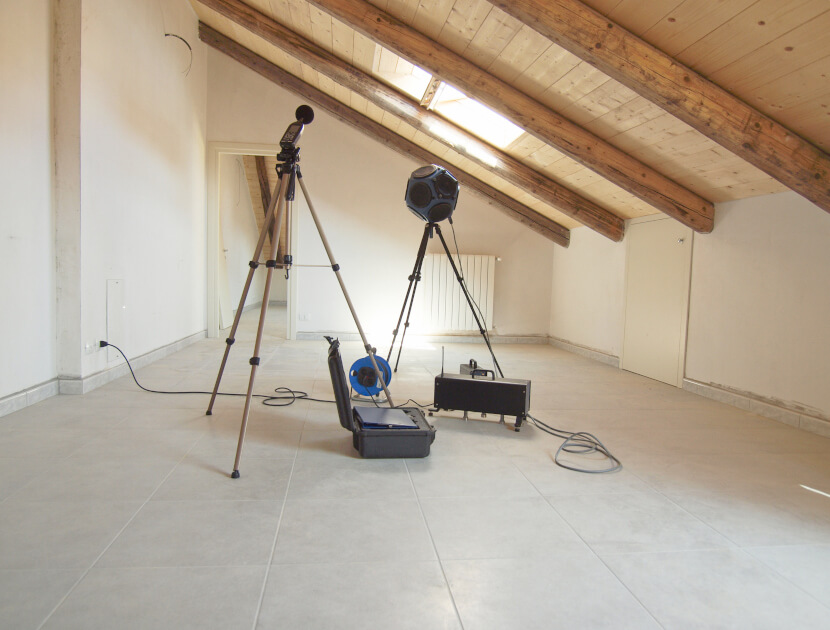
Acoustics: Failures in Buildings
In this webinar, Ros will examine the most common causes of acoustic failure in residential and commercial developments. Drawing on real-world....
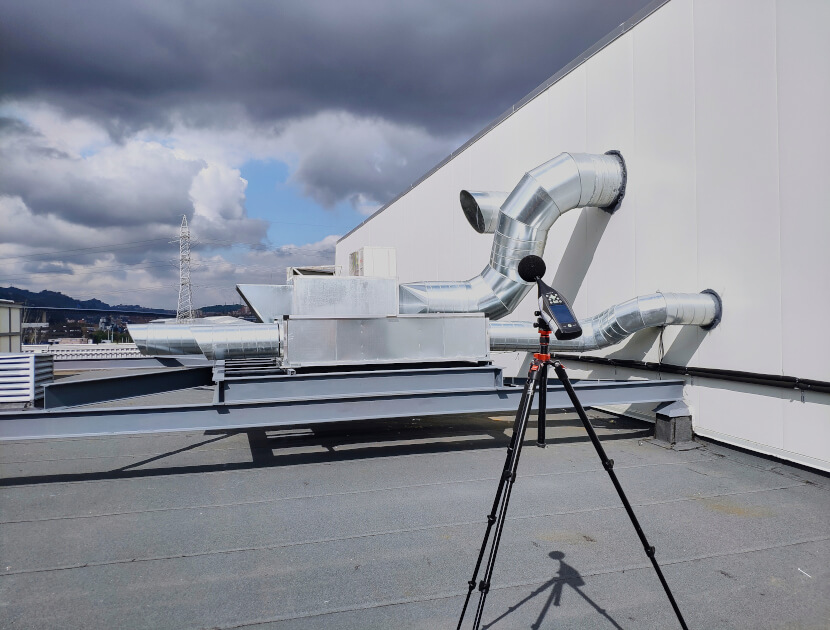
Air Source Heat Pumps: Managing Noise in London
Marie will examine the principal noise issues associated with ASHP installations and the acoustic assessments commonly required to support planning....