 Italiano
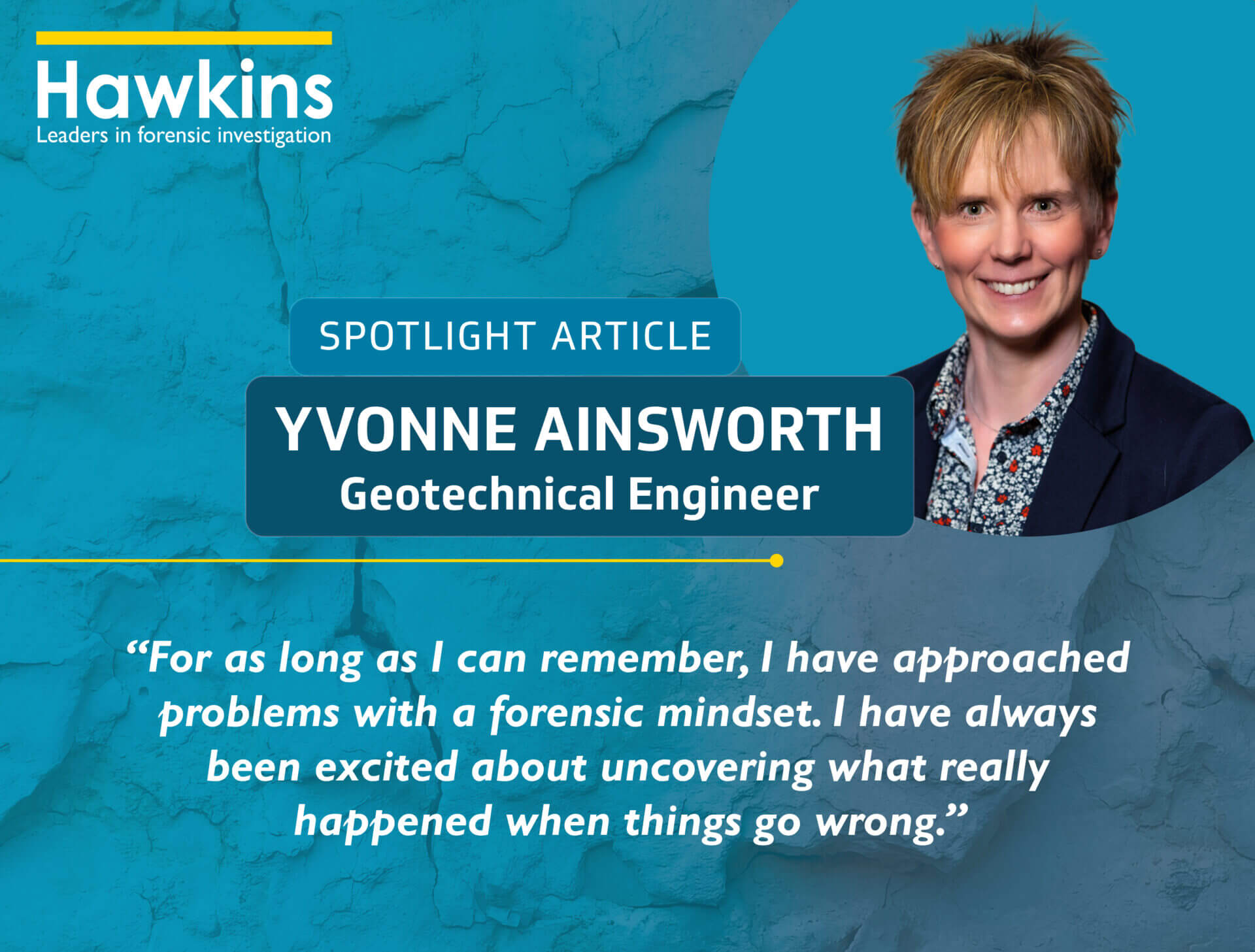
Yvonne joined Hawkins in December 2025 as a Principal Associate, bringing expertise in geotechnical engineering. She is a Chartered Civil Engineer and Fellow of the Institution of Civil Engineers (ICE), with extensive leadership experience across major infrastructure and energy projects. Her background combines technical expertise in geotechnical design and construction, with senior roles in operational management, risk, and HSEQ.
After graduating with a first-class degree in Civil and Structural Engineering from RWTH Aachen University, Yvonne began her career with WS Atkins before moving into specialist piling and geotechnical contracting. She delivered complex foundation and retaining wall projects, including Battersea Power Station and major Crossrail stations, and became a recognised authority in piling and diaphragm walling for high-risk schemes, both in the UK and internationally.
Yvonne later progressed into Director roles, overseeing geotechnical solutions for Energy from Waste and renewable energy projects. She then became Managing Director (Onshore) and subsequently Business Unit Director for Taylor Woodrow’s South Region, where she led a £40m portfolio and a multidisciplinary team.
We spent some time with Yvonne to learn more about her career journey and what brought her to Hawkins.
Tell us a bit about your background and your role at Hawkins
I have always been intrigued by how things work. During my Erasmus year in 1998/99, which I spent at Sheffield University, I learnt about geotechnical engineering, and it has fascinated me ever since. My degree was highly theoretical, so when I started my career, consultancy was the obvious choice. However, I soon realised that I didn’t fully understand how things were built. My employer gave me the opportunity to spend some time on site, and I truly fell in love with it. Having to make decisions quickly, often with limited information available was extremely exciting and rewarding. From that point on, I spent most of my career in construction.
I have now joined the geotechnical team at Hawkins, and am looking forward to broadening my experience into the wider civil and structural engineering world.
What motivated you to become a forensic investigator?
For as long as I can remember, I have approached problems with a forensic mindset. I have always been excited about uncovering what really happened when things go wrong, even though I have spent the majority of my career planning to prevent those situations in the first place. Before joining Hawkins, I was often sent to site to ‘figure out’ what was going wrong, whether this was operational, commercial or technical. This was arguably the most enjoyable part of my job, so the move to become a forensic investigator is probably not as big a change as it looks on paper.
What drew you to Geotechnical Engineering?
Geotechnics has always fascinated me because soil doesn’t behave like other engineering materials, it’s far less predictable. What you do to the ground in one area of site, is most likely producing a completely different response somewhere else. In addition to that, a lot of the work in geotechnics takes place below ground, such as piling, tunnelling or ground anchors, so you can’t directly observe it. As a geotechnical engineer, you rely on your experience, knowledge and a decent amount of intuition. I think that’s a great combination!
“For as long as I can remember, I have approached problems with a forensic mindset. I have always been excited about uncovering what really happened when things go wrong.”
What attributes do you consider important for a successful forensic investigation career?
Attention to detail, as well as logical and analytical thinking. Without those, you are unlikely to get to the bottom of what happened.
What’s the most interesting case that you have worked on?
I was once sent to Montreal, Canada, to help understand why the tendered drilling outputs were not being achieved as expected, and whether this was due to a change in ground conditions. Working in -35°C, surrounded by snow and ice, whilst observing the activities on site, was certainly an experience. What made this case particularly interesting was the combination geology, the effect of low temperatures, human behaviours and logistics. And I have never been to site with heated Portaloos since…
What do you love most about what you do?
I love being a geotechnical engineer. Solving problems or figuring out what went wrong is simply the icing on the cake. The most rewarding part is figuring out what happened and then someone else coming to the same conclusion. I love that I don’t consider my job as something I have to do, but rather something that I want to do. I’m excited that every day brings a new challenge or opportunity. It’s never boring or predictable!
What business advice would you give to your younger self?
Be patient. Good things sometimes take time.
Whilst I have become a lot more patient since having children (and probably with age) it’s still not my strong point. I often have to remind myself that some things simply need time. This is equally good advice when working with people: some people will be with you immediately, while others need time to take things in and digest the information. Be patient in your approach, don’t rush.
“I love being a geotechnical engineer. Solving problems or figuring out what went wrong is simply the icing on the cake.“
Do you have a favourite app, gadget or tool
I don’t have a favourite app, gadget or tool that I rely on for work, but I often go for a long walk or run to think things through in my head and evaluate different scenarios. Finding the root cause of an issue, often takes time and consideration, something that I find best done away from a desk.
What are the biggest challenges in the industry?
The biggest challenge in the industry is the skills shortage. Engineering, especially geotechnical engineering, is becoming less and less popular, and universities are struggling to fill available spaces. At the same time, the industry is losing a lot of experience through retirement or people leaving the profession at mid-career stage.
Another challenge is the mindset around learning. Too often I hear people say, ‘Oh, I did that 3 years ago, I can’t remember now.’ Learning shouldn’t be just about passing an exam, it needs to be continuous and long-term. Understanding the fundamental principles of engineering is vital as a forensic investigator.
Where do you see the industry evolving in the future?
I can see that technology and digitalisation will play an ever-increasing part in the way we build, and therefore in the way things will go wrong. But new technologies will also create opportunities for forensic investigation, whether through the speed with which we access information, improved analysis tools, or new ways of interacting with others and examining scenes. We need to embrace the technological advances and use them to our benefit.
What differentiates Hawkins from other forensic investigation/consultancy firms?
From my experience so far, the biggest difference is the level of investment in staff development. Training is given the top priority, and all aspects of the business contribute to it. I also have to say that everything is much more organised here than any other business I have worked for in the past.
“I can see that technology and digitalisation will play an ever-increasing part in the way we build, and therefore in the way things will go wrong...We need to embrace the technological advances and use them to our benefit.“
Tell us something about yourself outside of work
Apart from the fact that I am German, which, with a name of Yvonne Ainsworth, is not that obvious, I like to stay active. I enjoy going to the gym, playing pickle ball or taking the dog for a walk. I also used to be qualified football referee and once officiated an U18 Arsenal match, and I now coach my daughter in her refereeing career.
What’s something you have done, but will never do again?
Sky diving. I’ve always said I try everything once, but I hated every second of it and screamed the entire way down.
What is your guilty pleasure?
Having a mid-afternoon snooze at the weekend.
Do you have a hidden talent?
People often say I have a crystal ball to predict the future (and no, I can’t tell you the lottery numbers). I call it intuition and gut feel.
What is the top destination on your must-visit list and why?
I have been fortunate enough to visit my must-see destinations. In my thirties, and before having children, I took a year out to travel the world. I visited India, Nepal, Southeast Asia, and Australia. I’ve always loved travelling and experiencing other cultures. I have also been to New Zealand, most of Europe, America and Canada. Africa and South America are still on my bucket list.
What is one song you have completely memorised?
Hakuna Matata from The Lion King. Don’t ask me why.
If you would like Yvonne or another Hawkins expert from another discipline to investigate a case or present to your organisation, please contact us.