 Italiano

The environmental burden of per- and polyfluoroalkyl substances (PFAS) is huge: Recent estimates suggest the cost to remediate PFAS pollution across the UK and Europe could exceed £1.6 trillion over the next 20 years.¹ These so-called ‘forever chemicals’ degrade extremely slowly and are increasingly associated with adverse health effects. As a result, businesses should take notice of their potential exposure to PFAS-related liabilities.
What Are PFAS?
Everyday products contain thousands of chemicals, each selected for a particular function because of its unique characteristics. There are dyes that impart colour to clothes, medicines with specific biological activity for curing disease, and materials with the electrical and physical properties required in the batteries that power our mobile phones. The chemical industry has, without doubt, greatly enriched our lives.
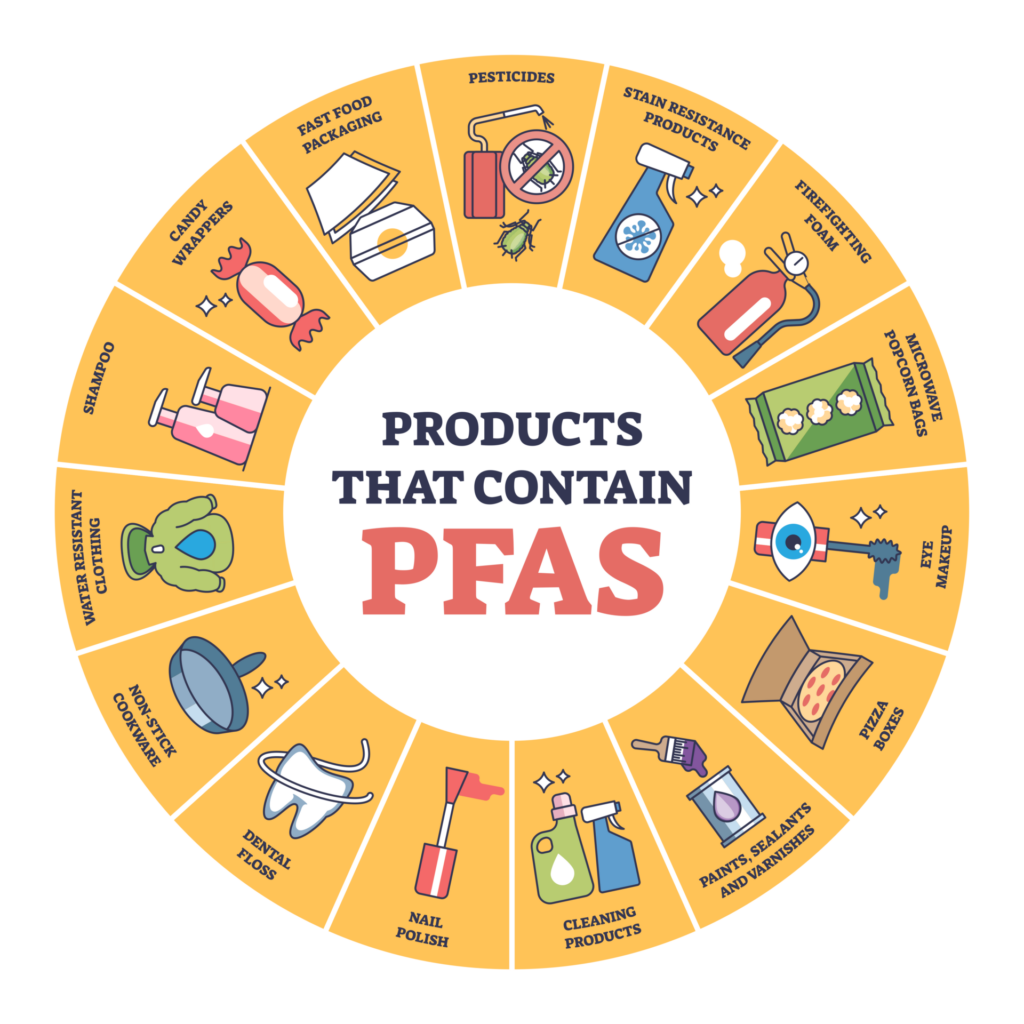
PFAS are a large class of chemicals with a number of useful properties, such as oil and water repellence and resistance to chemicals and high temperatures. This is a consequence of their chemical structure: PFAS are characterised by the presence of multiple carbon–fluorine bonds, which are amongst the strongest bonds carbon can form with any other atom. Given these attractive attributes, it is easy to understand why PFAS have found a broad range of applications, including the following:
- Non-stick coatings (e.g. on frying pans)
- Greaseproof food packaging
- Waterproof clothing and cosmetics
- Stain-resistant carpets and furnishings
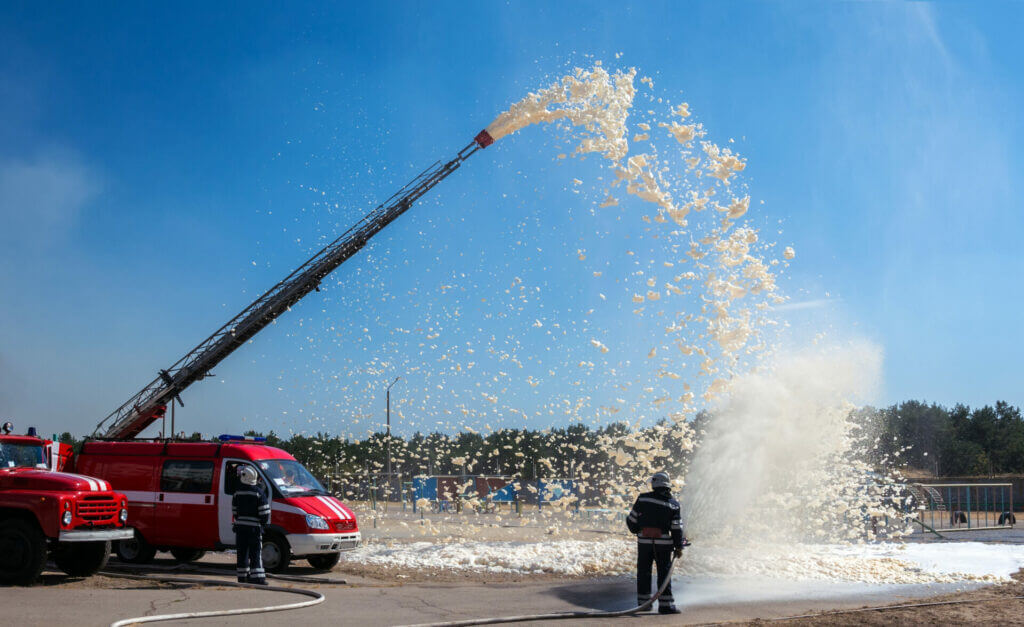
- Firefighting foams
What is The Problem?
The widespread use of PFAS has had an unfortunate consequence: it has led to the substantial release of PFAS into the environment, particularly the hydrosphere. A peer-reviewed study assessed over 45,000 samples of surface and groundwater from around the world and found that many were contaminated with PFAS at levels exceeding those recommended for drinking water.²
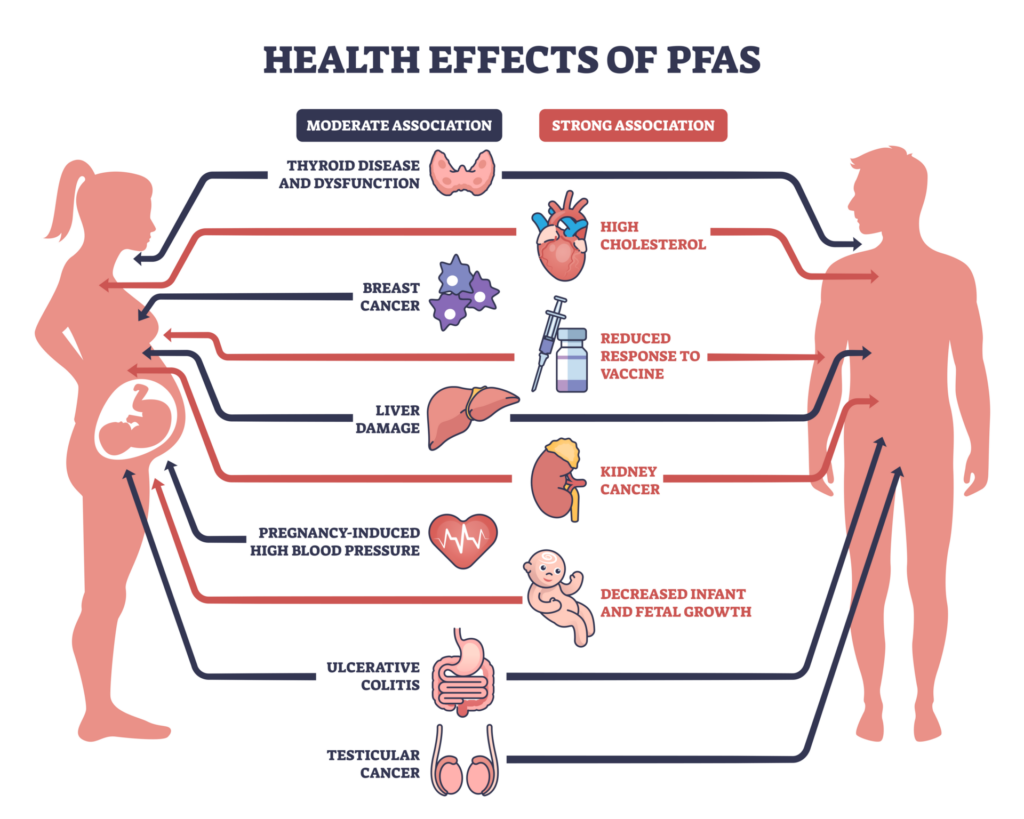
The chemical and heat stability that make PFAS useful also make them highly resistant to degradation in the environment, rendering them persistent contaminants of water and soil – hence the label ‘forever chemicals’. These contaminants are taken up by, and can accumulate within, plants, animals and humans. As humans are at the top of the food chain, this poses a significant risk to human health. There is a growing body of evidence linking certain PFAS to a range of potential adverse health effects, including several types of cancers, infertility, hormonal changes and developmental defects in unborn children.
How Do PFAS Get Into The Environment?
Environmental contamination with PFAS originates at locations where there is potential for significant discharge into the surroundings, for example:
- Industrial facilities that produce, process or use PFAS may release them into the environment; examples include textile, paper and plastic manufacturing.
- Airports, firefighter training areas and sites of major fires where PFAS-containing aqueous film-forming foam (AFFF) is used for firefighting, and ultimately ends up in soil and local water bodies.
- Wastewater treatment plants where outflowing water and sludge contaminated with elevated levels of PFAS may be discharged into rivers and spread over fields.
- Landfill sites are commonly the disposal route for PFAS-containing products, forming leachates that release PFAS into the surrounding earth and watercourses.
- Incinerators often do not operate at temperatures sufficient for the complete combustion of PFAS in waste, and can therefore produce ash that contaminates the air, soil and water.
Even after the activity that releases PFAS at a site has stopped, emissions often continue, with PFAS leaching out of contaminated materials, like waste, concrete and soil. Furthermore, on account of their chemical stability, and high mobility when bound to airborne particles or dissolved in water, many PFAS can be transported over long distances.³ As a result, they have been detected at significant concentrations far from any known source of their release, such as in the polar regions.
How Are PFAS Regulated?
The global regulatory landscape surrounding PFAS is constantly evolving as we learn more about their risks. This makes it likely that manufacturers will face increasingly stringent standards restricting the PFAS content of their products. For instance, the PFAS compound perfluorooctanesulfonic acid (PFOS), which was commonly found in AFFF used for firefighting, has been subject to a worldwide ban since 2011. From last year, perfluorooctanoic acid (PFOA), which was also found in AFFF, has been prohibited in the UK and EU.
Regulation relating to the use and release of PFAS in the USA has progressed in some areas. In 2024, the US Environmental Protection Agency stipulated limits under the Safe Drinking Water Act for six different PFAS, including PFOS and PFOA. The limits for PFOS and PFOA are four parts per trillion (ppt, or one part in 1,000,000,000,000). Other PFAS are limited to no more than 10 ppt. Some US states have also set their own limits on individual or combined PFAS concentrations.
UK and European legislation have not yet set limits as stringent as those in the USA. The UK Drinking Water Inspectorate has set an action level when the sum of PFAS exceeds 10 ppt, and an emergency level of 100 ppt. New EU drinking water regulations introduced in January 2026 set a limit of 500 ppt for total PFAS and a combined maximum of 100 ppt for 20 selected PFAS of concern.
Critics of existing regulatory frameworks argue that such measures do not go far enough and continue to push for a blanket ban. Decision-makers need to consider:
- Does it make sense to regulate individual PFAS compounds, or the class of chemicals as a whole?
One approach is to regulate only those compounds with a proven risk to the environment or human health. However, all PFAS contain multiple carbon–fluorine bonds that render them persistent environmental contaminants.
- In which situations may particular PFAS be used?
There may be important uses of PFAS that can be tolerated if there are suitable controls in place that can mitigate the potential harm to the environment.
- Could we substitute PFAS compounds with less problematic alternatives?
As the situation stands today, there are not many alternative solutions that are viable, readily available and cost-effective for many use cases. The development of such replacements is costly and bringing them to market can take time to ensure that ‘regrettable substitution’ [4] does not occur.
What Does This Mean for Businesses?
The types of PFAS-related claims faced by businesses may involve environmental or pollution claims (including remediation costs), property damage, personal injury (from employees, customers or members of the public), and even allegations of deceptive marketing.
Some noteworthy examples include:
- In 2023, 3M Company reached an agreement with various public water systems in the US to pay a $10.3 billion settlement to resolve thousands of lawsuits.
- DuPont and its spin-offs, Chemours and Corteva, made a deal with the State of New Jersey in 2025 that included an $875 million settlement payment and the creation of a fund of up to $1.2 billion to remediate four industrial sites in the state.
- In a groundbreaking ruling in 2023, the Swedish Supreme Court ruled that a municipal water company was liable for compensating more than 150 residents who had suffered personal injury as a result of drinking water with PFAS levels that far exceeded approved limits.
- As of 2026, a large multidistrict litigation in the United States District of South Carolina focused on AFFF is underway, aggregating more than 10,000 individual claims.
Therefore, it is important for companies to take steps to manage their exposure to risk. The starting point is to conduct a thorough assessment of internal operations and supply chains.
Elements of this assessment may include:
- Scrutinising the supply network
Work with suppliers to obtain detailed information about the composition of all purchased materials.
- Considering operations
PFAS may be used indirectly (e.g. in lubricants), creating hidden sources of supply chain contamination.
- Evaluating elimination or substitution
Assess the feasibility and impact of transitioning to PFAS-free alternatives while avoiding regrettable substitution.
- Understanding the regulatory environment
Companies operating across multiple jurisdictions must monitor rapidly-evolving and inconsistent regulations.
How Can Hawkins Help?
Hawkins has a team of experts with the technical knowledge and experience to advise, investigate and assist individuals, businesses, insurers and legal representatives at every stage of a contamination case.
We can provide:
- Pre-loss risk management
- Rapid response to contamination incidents
- Independent expertise
- Post-loss advice
About The Author
Dr Mehul Jesani is a forensic chemistry expert with a PhD in organic chemistry. He has worked in pharmaceutical research and has authored publications relating to both his academic and industrial work. Mehul joined Hawkins in April 2025 as an expert in fire investigation, chemistry and contamination.
Get in touch to discuss your needs with one of our contamination experts.
- https://www.theguardian.com/environment/2025/jan/14/cost-clean-up-toxic-pfas-pollution-forever-chemicals?CMP=share_btn_url
- https://www.nature.com/articles/s41561-024-01402-8
- https://www.nature.com/articles/s41561-024-01402-
- This term describes the replacement of a chemical identified as problematic with another that has an unknown or unforeseen hazard.