


 Italiano
Andy Bryce

Andrew’s career in forensic engineering began while carrying out an undergraduate placement at the Royal Aircraft Establishment, analysing the cause of aircraft component failures for the Air Accident Investigation Branch. Following his Masters Degree he joined Rolls Royce plc, Military Engine Division in 1988 where he was trained in the forensic investigation of engine failures for both in-service and development engines. Other areas of responsibility included carrying out in-service turbine component condition assessments and writing quality standards. Andrew resigned from Rolls Royce at Senior Scientist grade and joined Hawkins in 1991. Since joining Hawkins, Andrew has carried out over 1700 forensic investigations involving engineering, fire and explosion incidents both in the United Kingdom and overseas. These cases have covered a great range, from small domestic incidents to multi-million pound losses in shops, warehouses, factories, power stations (gas turbines & compressors), aerospace and marine. Andrew is experienced in the legal process and has given evidence in the capacity of an expert witness in Magistrates’ Courts, County Courts, High Courts, Crown Courts, Coroner’s Courts, mediations and arbitrations on numerous occasions. He is listed as an expert in the Expert Witness Directory. Andrew is currently a Director of Hawkins and based in the […]
Investigating Fires Involving Biomass Boilers

Biomass is the use of organic matter as a fuel, used since people first burnt wood to cook food and keep warm. More recently, it has been part of a drive for using renewable energy sources to fuel our homes and businesses, rather than fossil fuels.
Hawkins to join the IMechE’s Steam Turbine and Generator User Group 2022
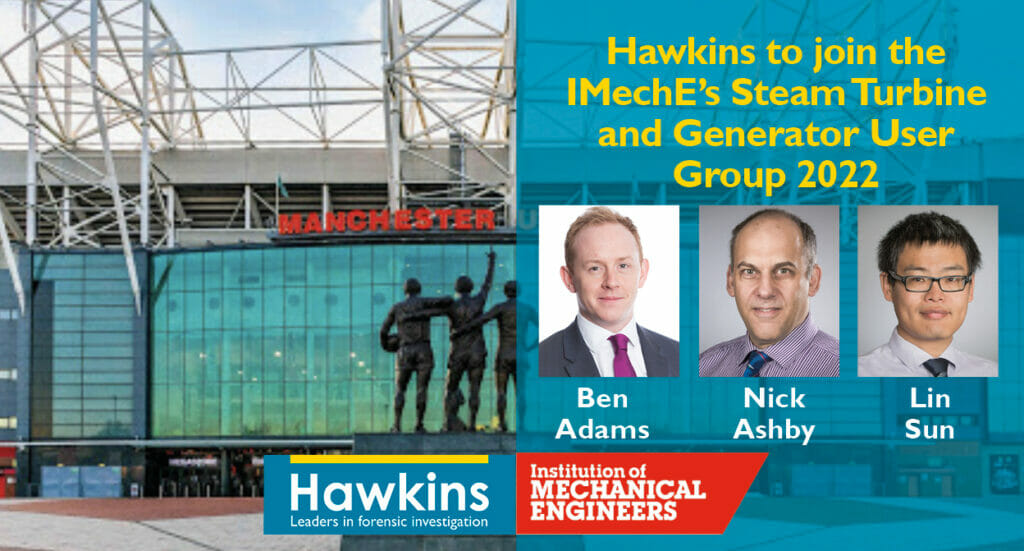
Hawkins are proud to be a part of the upcoming Steam Turbine and Generator User Group. Organised by the Institution of Mechanical Engineers, the user group will once again bring together this specialist engineering community to discuss key challenges, share new solutions, and offer innovative strategies.
Spark Ignition: Electrical Fires Onboard Vehicles
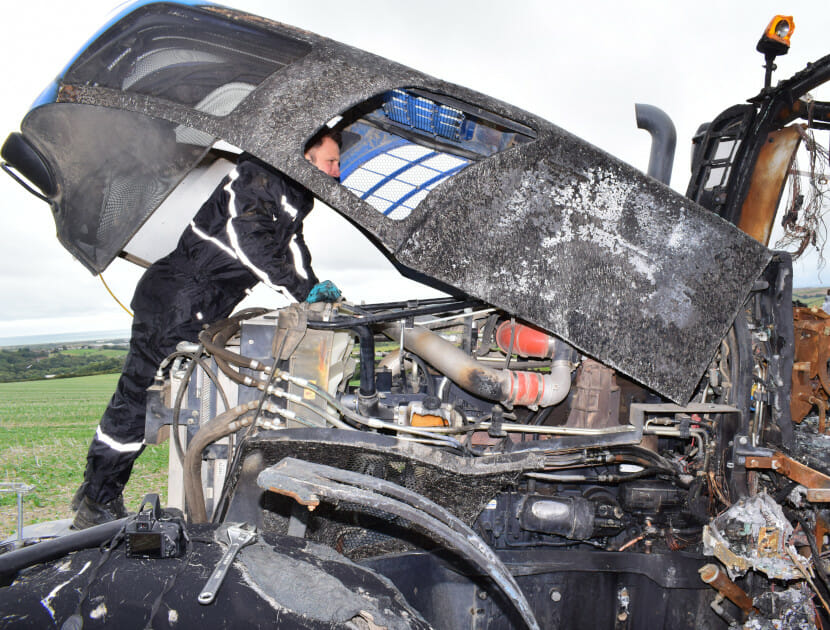
Forensic investigations into the causation of vehicle fires may be considered, by some, to be a dark art.
The Power of Small Modular Reactors
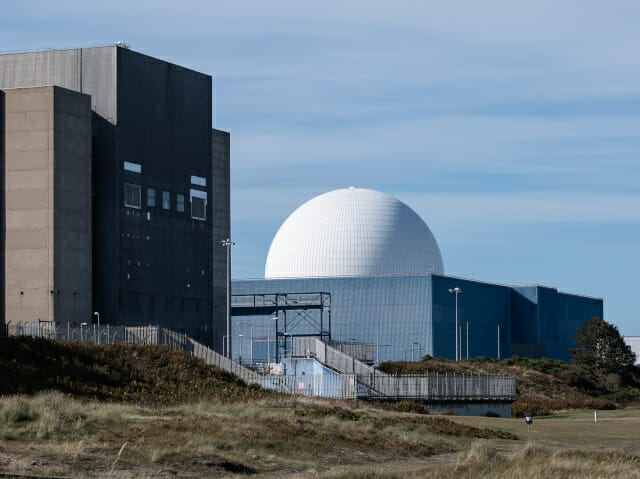
On 2 December 2021, Clara Lloyd attended the Nuclear Institute/Nuclear Industry Association annual dinner and, together with her co-authors, was awarded the 2020 Pinkerton Prize for their article ‘Expanding Nuclear’s Contribution to Climate Change with Small Modular Reactors (SMRs)’ (Nuclear Futures, Vol. 16, No. 5).
BLEVEs – The Hidden Danger of Back Boilers
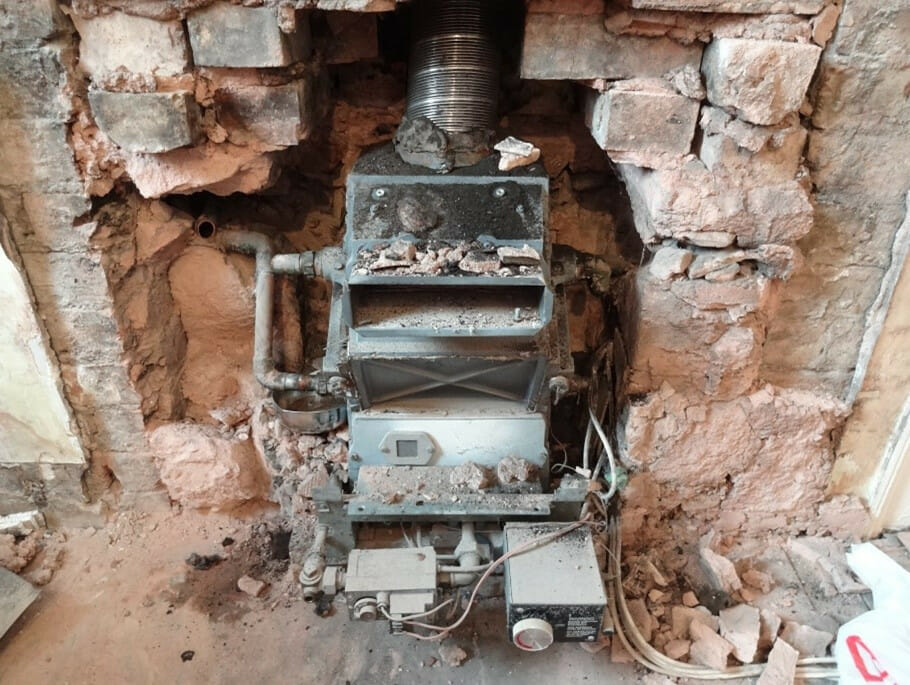
Back boilers are often located within a chimney breast behind either an open fire or range cooker, and they are typically installed during a house’s initial construction.
Investigations Into Steel Structure Failures Part I: Failure Mechanisms
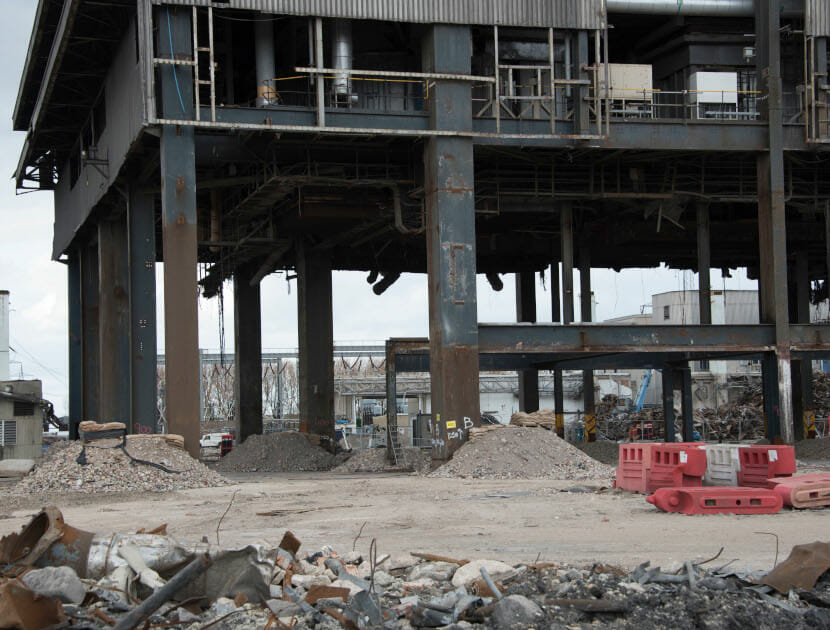
Steel is one of the most commonly used construction materials, due to its wide availability and good strength-to-weight ratio, both in tension and compression.
Ben Adams Presents on Generators at OEC London 2021
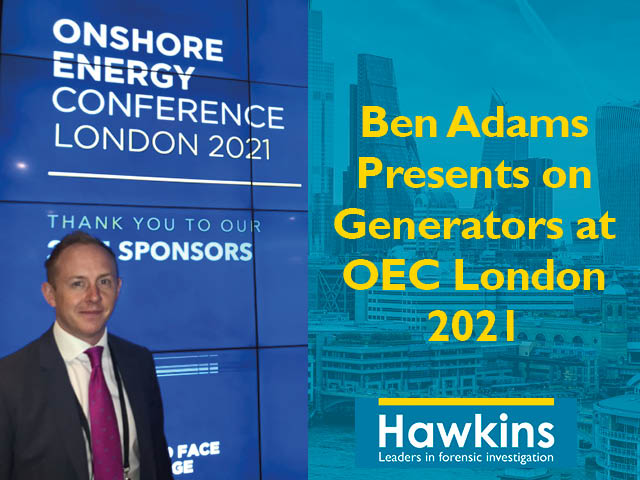
On 2nd November, Ben Adams, a Mechanical Engineer from the Hawkins’ Power & Energy Team and based in our London Office, was a speaker at the London Onshore Energy Conference.
Hawkins Welcomes Mechanical Engineer Richard Woodward
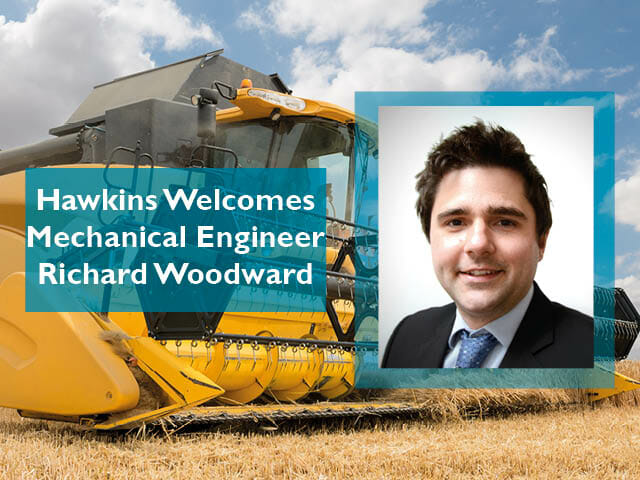
Richard comes from a background in agriculture, where he spends a lot of his spare time working on his family-run farm. From this work, he has generated an extensive understanding of agricultural equipment, extending to plant and HGV’s. This has given him experience of damage assessment and repair as well as design and fabrication of bespoke equipment.
The Power Generation Game
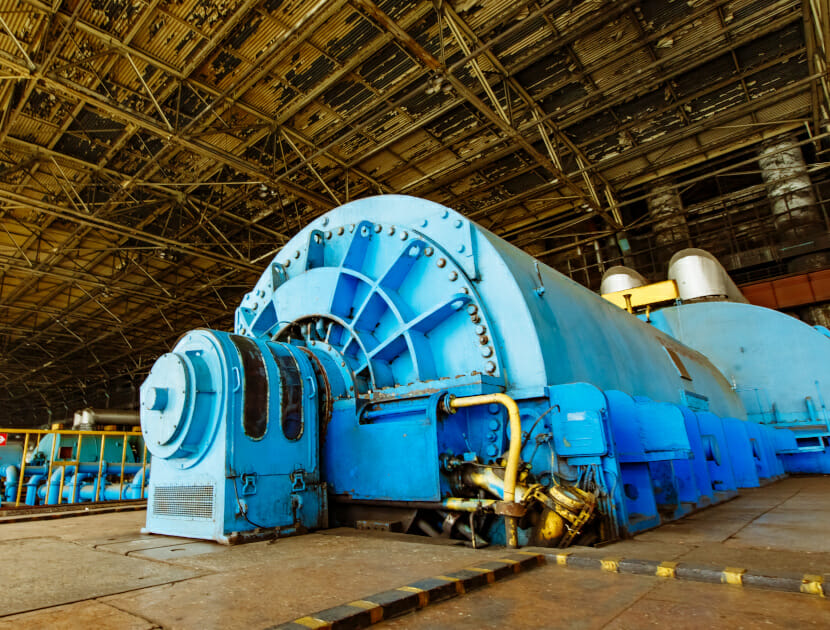
The process of turning mechanical energy into electrical power is pretty fascinating. You may remember turning a magnet near a coil and seeing a light bulb illuminate at school? In practice, power generation in the real world is fairly similar; an electromagnet is spun by a turbine (through wind, water, steam or a combustion engine) and power is produced. In practice, this electro-magnet may be over 100 tonnes, spinning at 3000 times a minute within a stationary coil weighing hundreds of tonnes. The largest generators being manufactured at the moment are rated in excess of 1.5 GW (gigawatts, or billion watts – enough to power three million UK homes). Whether being driven by wind, water steam or gas turbines, all generators are made of the same parts.