







Cycling Accidents
Cycling incidents are rarely as straightforward as they may appear at first glance. Numerous factors can contribute, some more significant than others.
The layout and condition of the highway can play a role, as can highway related features such as road humps, posts, and kerbs. Visibility, environmental and weather conditions are also important considerations, along with speed and the condition or maintenance of the bicycle itself, including any potential mechanical failure.
At Hawkins, we specialise in cycling accident investigation, providing expert forensic analysis to uncover the root cause of incidents involving cyclists—whether on urban roads, rural lanes, or designated cycling facilities. Our forensic engineers combine technical expertise with practical insight to deliver clear, evidence-based conclusions.
Whether a case involves a cyclist colliding with a vehicle or a stationary object, being dismounted due to surface conditions, or a suspected mechanical failure, our investigations support legal claims, insurance assessments, and safety improvements. Hawkins can also assess the cyclist’s speed at the time of the incident and evaluate whether wearing a helmet could have influenced the severity of injuries sustained.
WHY APPOINT A FORENSIC INVESTIGATOR?
Appointing a forensic investigator after a cycling incident can prove essential for accurately determining the cause of the incident and considering the injuries sustained. Our independent forensic reports support insurers, solicitors, and highway authorities by establishing liability, resolving disputes, and informing future risk mitigation strategies.Â
- The relevant UK design standards and best practice regarding the layout of cycle facilities have evolved over recent years, but we have in-depth knowledge of those changing standards and best practice that should be followed.
- Highway authorities in the UK may adopt designs and layouts that differ from national guidance. Hawkins employs engineers with proven expertise in the design and assessment of cycling layouts and facilities. We review working practices, designs, and installations to identify areas of high risk.
- We provide guidance or support to help you define and implement robust procedures to reduce the risk of incidents.
- We can establish whether mechanical or maintenance issues contributed to an incident, enabling third-party claims to be redirected appropriately.
- We can determine the approximate speed of a cyclist at the time of an incident and assess whether that speed was appropriate for the location.
- We can evaluate whether wearing a cycle helmet could have influenced the severity of injuries sustained.
- We provide you with the answers you need to understand why an incident occurred and assist in making informed repudiation and recovery decisions.
- Our experts have proven experience in investigating all aspects of cycling incidents.
- We can determine whether an incident could have been avoided.
- We support subrogation recovery claims.
- We help you to make decisions regarding where legal responsibilities and/or liabilities lie.
- We help you to defend against wrongful claims.
- We produce reports suitable for Court and litigation.
- We provide consultancy advice to prevent similar events happening again in the future.
- If removing a risk entirely is unavoidable, we advise on mitigation strategies to reduce potential damage.
- We advise on servicing, maintenance and repair regimes.
- We have detailed knowledge of policy cover, liability and warranties to assist decision making.
Examples of Typical cases
- Collision with a Signpost: A cyclist using a shared facility struck a centrally positioned signpost and was deflected into the path of a lorry. Hawkins investigated the design of the shared facility, the necessity of the signpost, and its visibility on approach.
- Pothole Claim: A cyclist claimed that a pothole in the road surface caused them to fall and sustain injuries. Hawkins examined both the road condition and the bicycle, discovering that a mechanical defect in the bicycle was the likely cause rather than the road surface.
- Road Hump Incident: A cyclist encountered a road hump and fell. Hawkins assessed the road layout, the visibility and appropriateness of the road hump, and determined the cyclist’s likely speed at the time of the incident. We also provided expert advice on whether the absence of a helmet affected the severity of injuries.
- Pothole & Inspection Review: A cyclist was dismounted after hitting a pothole. Hawkins investigated the size and depth of the pothole, whether the road had been inspected appropriately, and whether the defect was present during the last inspection.
- Junction Collision: A cyclist emerging from a junction was struck by a car. Hawkins determined the speed of the car, the cyclist’s actions, their visibility, and whether the collision could have been avoided.
If you would like more information or to discuss a specific incident, contact us for a free consultation.
HOW DOES HAWKINS INVESTIGATE A CYCLING INCIDENT?
1
Consultation
When a cycling incident occurs, Hawkins begins by gathering initial information to understand the context and potential contributing factors. This consultation phase may include reviewing witness statements and police reports, obtaining available CCTV or dashcam footage, discussing the cyclist’s route, experience, and equipment, and identifying key questions about road layout, signage, and traffic conditions.
2
Inspection
Our inspection process is designed to uncover the facts with clarity and precision. We typically carry out on-site inspections and drone surveys to map the accident scene and assess impact patterns. CCTV analysis is used to reconstruct the sequence of events, and 3D scanning technology digitally preserves the scene and key evidence. We review the road layout, traffic flow, and cyclist positioning to identify contributing factors, conduct a detailed examination of bicycle components and safety gear to assess mechanical failure or misuse, and analyse documentation to consider any design parameters or maintenance issues.
3
Conclusion
Cycling incidents can quickly become complex, with debris and damage obscuring the root cause. Hawkins’ investigations are designed to provide clarity, using advanced technology and expert analysis to assess the road layout and other contributing factors. Our goal is to deliver clear, evidence-based insights that support resolution and prevention.
SPEAK TO ONE OF OUR EXPERTS
Related areas of expertise
Road Traffic Collisions
Hawkins has the largest group of Road Traffic Collision investigators in the UK, including some forensic engineers with over 30 years’ experience.
Vehicle Examinations
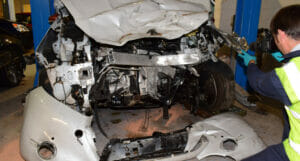
Whether the case involves a car, bus, heavy goods vehicle, motorcycle, farming equipment, or a bicycle, Hawkins’ engineers consider various vehicle attributes during an examination, such as: patterns of damage, occupant restraints, vehicle condition, vehicle defects, tyre performance, and vehicle stability. It is also becoming more common for vehicles to carry recoverable collision data from the EDR (Event Data Recorder) aka the black box.
Collision Reconstruction
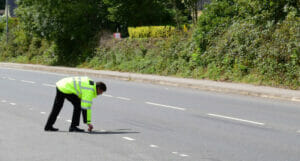
Road traffic collisions (or accidents) are often traumatic incidents and litigation arising as a result is becoming more common as Court awards increase and injured parties become more aware of the compensation that might be available to them. Hawkins can provide detailed analysis of an incident and prepare forensic collision investigation and reconstruction reports suitable for use in Criminal or Civil Courts.
Vehicle Types
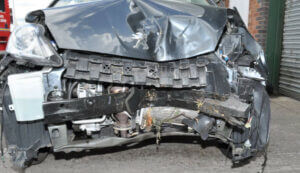
Hawkins have the knowledge and experience to inspect a wide range of vehicles for defects and assessment of damage following a road traffic collision.

Highway Engineering
The condition of roads and highways, their drainage, layout or the routine maintenance of them is often blamed as being the cause of an accident or as having been a contributory factor. Sometimes this is true, but not always and when it is true, it is often necessary or helpful to determine to what degree.
3D Photogrammetric Modelling
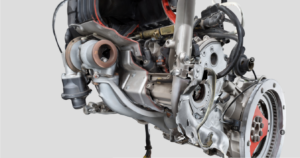
Photogrammetric modelling is the process of using 2D still photographs of an object or terrain to reconstruct a 3D model through a process of recording, measuring and interpreting imagery derived from non-contact sensor systems.

Digital Forensics
Given the prevalence of technology in the world today, the need to investigate the activities conducted using technological devices is becoming more relevant and useful.

Video Analysis
Closed Circuit Television (CCTV) systems and portable video recording devices are ubiquitous. Video recordings can provide definite and compelling evidence, often entirely in isolation.
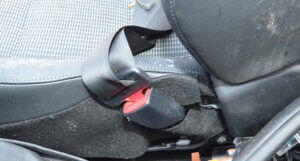
Seatbelts
Expert seatbelt forensic analysis for road traffic collisions. Independent reports for insurers, solicitors & legal cases.