





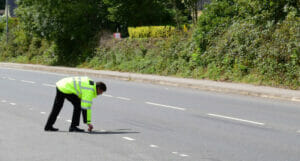
Helmets & Protective Headgear
Forensic Investigation of Helmets and Protective Headgear
Protective headgear plays a critical role in reducing the risk of head injuries across a wide range of environments—from road traffic collisions and workplace incidents to sports-related accidents and industrial settings.Â
At Hawkins, we don’t provide medical opinions—but we play a crucial role in supporting them. Our forensic engineers specialise in analysing how helmets and protective headgear can perform during an incident, assessing factors such as construction, damage, deformation, impact evidence, and the interaction between the headgear and external forces, and the extent to which head impact forces would be reduced under the reported circumstances.
These findings give medical experts the technical insight they need to evaluate whether the performance of the headgear could reasonably be expected to have moderated impact forces under the reported circumstances. Whether the case involves a fall, collision, equipment failure, or suspected design defect, our investigations provide clear, evidence-based conclusions that support legal claims.
WHY APPOINT A FORENSIC INVESTIGATOR?
Understanding how helmets and protective headgear performed during an incident is vital for assessing injury causes and liability. We analyse damage, impact forces, and compliance with safety standards to deliver clear, impartial findings.
- We have an in-depth knowledge of the standards, regulations and best practice that should be followed
- We provide technical guidance informed by standards, regulations and forensic experience to help you define and improve good working procedures and practices to reduce the risk of incidents occurring
- We provide evidence‑based engineering opinions to assist in determining why an incident occurred and to assist in making informed repudiation and recovery decisions
- Our experts are knowledgeable in a wide range of areas with proven expertise and can investigate all aspects protective of a headgear case
- We have the laboratories and specialist equipment to fully support engineering failure investigation.
- We will help determine whether the headgear was worn correctly and in accordance with guidance.
- We support subrogation recovery claims
- We help you to make decisions regarding where legal responsibilities and/or liabilities lie
- We help you to defend wrongful claims
- We produce reports suitable for Court and litigation
- We provide consultancy advice to prevent similar events happening again in the future
- If removing a risk entirely is unavoidable, we advise on steps to take to mitigate the risk and reduce the potential damage resulting from an incident
- We have detailed knowledge of policy cover, liability and warranties to assist decision making
Examples of Typical cases
- Protection afforded by helmets in incidents where:
- A helmet was not worn
- A helmet detached prior to impact
- A helmet was of an inappropriate size or type
- The area of head coverage relative to the head injury in question.
- Typical incident types include:
- Motorcycle and bicycle collisions
- Construction and industrial incidents
- Sporting and recreational activities
Yes, we can also carry out normal engineering analysis of helmet integrity and conformance to manufacturing and safety standards.
If you would like more information or to discuss a specific incident, you can contact us for a free consultation.
HOW DOES HAWKINS INVESTIGATE?
1
Consultation
We like to speak to you before we conduct any work, so that we can establish if we can add any value to the case. These discussions help us to understand your requirements, as well as determining how much information is already available such as service records, first-hand witness accounts, photographs, and videos.  We are also happy to provide you with an estimate of the cost of conducting a forensic investigation.
2
Inspection
If required and with your agreement, we will arrange to visit the scene to perform an examination to establish the facts regarding the failure and the circumstances surrounding it. This normally involves taking witness statements, examining physical evidence and studying engineering drawings, specifications and manuals. Wherever possible, we will retain faulty parts for examination in our laboratory, where we use a range of equipment, tools, and tests. Where dispute remains or where facts are not available, we will provide an informed and professional opinion.
3
Conclusion
Once our examination is complete, we will discuss our findings with you and prepare a report containing a detailed account of our investigation, conclusions, and where appropriate, recommendations for further work or advice.
We are independent, impartial and unbiased and we are instructed by both Claimant and Defendant solicitors and insurers. We can provide a range of reporting levels and work within the relevant Civil Procedure Rules and are effectively agents of the Court in everything we do.
SPEAK TO ONE OF OUR EXPERTS
Related areas of expertise
Collision Reconstruction
Road traffic collisions (or accidents) are often traumatic incidents and litigation arising as a result is becoming more common as Court awards increase and injured parties become more aware of the compensation that might be available to them. Hawkins can provide detailed analysis of an incident and prepare forensic collision investigation and reconstruction reports suitable for use in Criminal or Civil Courts.

Highway Engineering
The condition of roads and highways, their drainage, layout or the routine maintenance of them is often blamed as being the cause of an accident or as having been a contributory factor. Sometimes this is true, but not always and when it is true, it is often necessary or helpful to determine to what degree.
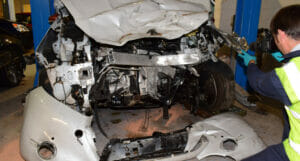
Vehicle Examinations
Whether the case involves a car, bus, heavy goods vehicle, motorcycle, farming equipment, or a bicycle, Hawkins’ engineers consider various vehicle attributes during an examination, such as: patterns of damage, occupant restraints, vehicle condition, vehicle defects, tyre performance, and vehicle stability. It is also becoming more common for vehicles to carry recoverable collision data from the EDR (Event Data Recorder) aka the black box.

Italiano