



Seismic Engineering

Earthquake engineering is an interdisciplinary branch of engineering concerned with protecting society and the natural and built environment from earthquakes by limiting the seismic risk to socio-economically acceptable levels.

This field of engineering plays a key role for safety and resilience in earthquake-prone regions primarily through the consideration of engineering design and analysis, protection of critical infrastructure, minimisation of economic impact, developing safety standards, and ensuring long-term resilience.

Earthquakes however continue to demonstrate their ability to cause devastation in seismically vulnerable regions, the most recent of which include Haiti (2010), Chile (2015), Syria (2023) and Myanmar/Thailand (2025). High death tolls, collapsed buildings, damaged infrastructure and socio-economic impact all highlight the importance and urgency of progressing the field of seismic engineering to ensure our built environment can become more resilient to earthquakes in the future.

Post-event seismic investigations (reconnaissance surveys) can help to identify and highlight some of the pitfalls associated with why buildings and infrastructure may have under-performed and/or unexpectedly collapsed during a seismic event. Lessons from previous earthquakes has shown the underlying cause of collapsed structures during seismic events can occur as a result of poor structural integrity (i.e. due to a lack of stringent building codes), the use of substandard materials (weak reinforcement, low quality cement), or design/analysis inadequacies.

WHY APPOINT A FORENSIC INVESTIGATOR?

Our team includes chartered civil and structural engineers with a strong knowledge of seismic engineering and related principles. When an earthquake strikes, our engineers can act quickly to respond first-hand. We can assist with seismic engineering and post-event investigations to understand the damage, inform recovery, and help improve future designs.

  • We have in-depth knowledge of seismic design codes including Eurocode 8 and ASCE 7, and understand the various methods adopted for seismic analysis in the design of structures
  • We can review design packages to determine the adequacy of the design
  • We undertake initial inspections following an event to help determine the immediate safety of a structure, and collate necessary data such as geological and seismographic data, strong-motion records, construction and performance information of specific structures
  • We can perform a technical analysis of the performance of a given structure by comparing actual sustained damage to expected performance
  • Our investigations often aim to distinguish between damage caused directly by seismic forces against pre-existing design flaws, construction errors, material defects, or poor maintenance
  • We support subrogation/recovery efforts
  • We help you to make decisions regarding where legal responsibilities/liabilities lie
  • We help you to defend wrongful claims
  • We produce reports suitable for Court and litigation
  • We can inform on short and long term repair and recovery efforts
  • Our studies can also help inform the development of resilience planning for future seismic events, for example additions or amendments to building codes
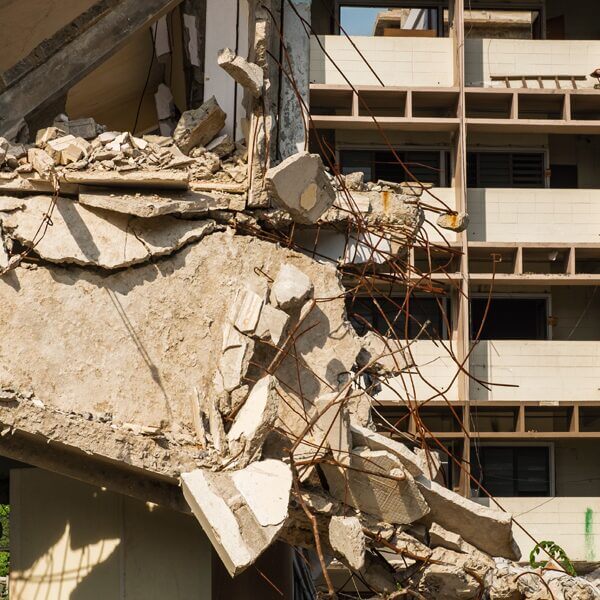
Building Collapse following a seismic
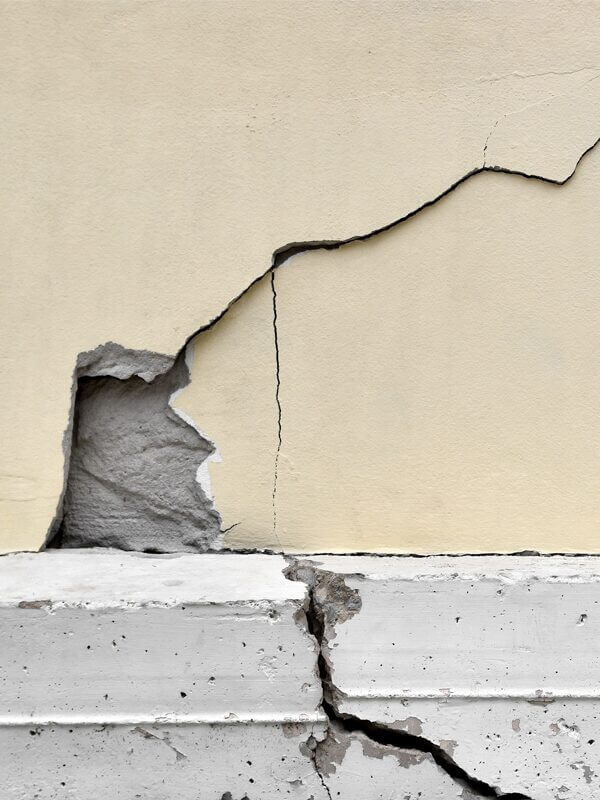
Plaster falling off a wall - on a cracked building - following an earthhquake

Examples of Typical cases

If you would like more information or to discuss a specific incident, you can contact us for a free consultation.

HOW DOES HAWKINS INVESTIGATE?

1

Consultation

We like to speak to you before we conduct any work, to establish how we can add any value to the case. These discussions help us to understand your requirements, as well as determining how much information is already available, including for example, design drawings, construction records, first-hand witness accounts, photographs, and videos. We are also happy to provide you with an estimate of the cost of conducting a forensic investigation.

2

Inspection

If required and with your agreement, we will arrange to visit the site to inspect the building or works that have failed. If appropriate, we can retain samples for examination in our laboratory, where we use a range of equipment, tools, and tests to determine the cause of a failure. This could include microscope examinations, load testing or chemical analysis to identify what products have been used and whether they were appropriate.

3

Conclusion

Once our examination is complete, we will discuss our findings with you and prepare a report containing a detailed account of our investigation, conclusions, and where appropriate, further work or advice.

Related areas of expertise

Built Environment

Our team of built environment experts includes a core group of civil and structural engineers together with experts in architecture, geotechnical engineering, flooding & hydrology, fire engineering, and acoustics.
Architecture

The role of the architect sits at the heart of the building industry. In many projects, the architect is responsible not only for the design of a building, but also for the coordination and management of that design and the team of consultants engaged by the client.
Building Defects & Regulations

A building defect can be described as any deficiency or shortcoming in the performance or function of a building that prevents it from satisfying statutory or user requirements. Building defects fall broadly into three categories:
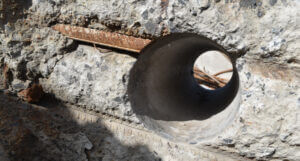
Concrete & Aggregates

Concretes, screeds and aggregates are the backbone of the building industry. Without these materials many structures simply could not be built. Yet the failure of these can have catastrophic consequences.