
 Italiano
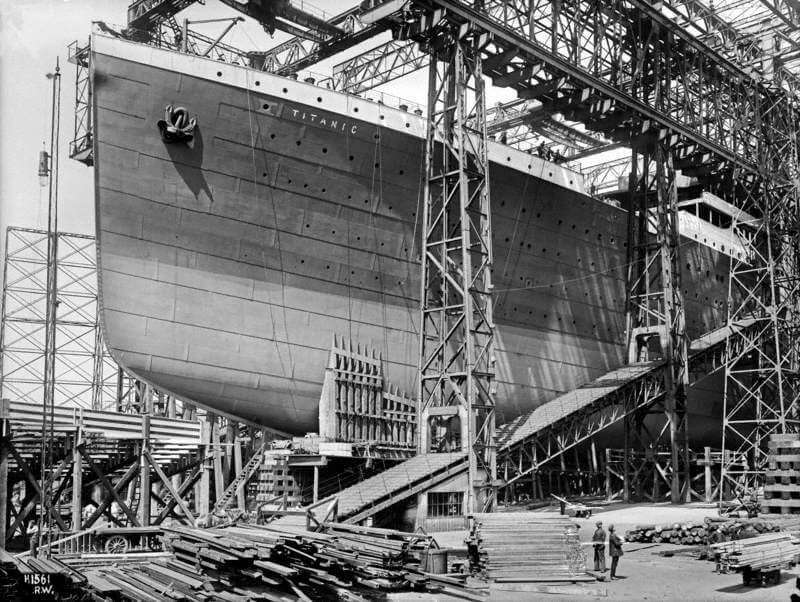

I recently read a metallurgical report authored by Dr Foecke¹ that was published in 1998 and discussed how metallurgical quality of materials affected the famous disaster. As a metallurgist, I found the report truly eye-opening, and would like to highlight some of the important metallurgical aspects that Dr Foecke presented.
Let’s start with a recap of what happened at the point of impact that fateful night.
The Titanic’s Journey to Collision
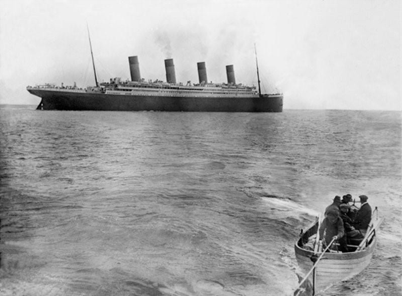
On 10 April 1912, the RMS Titanic set sail from Southampton, England bound for New York City, USA. After brief stops at Cherbourg, France, and Queenstown (now Cobh), Ireland, the ship continued its journey across the cold waters of the North Atlantic.
On the night of 14 April 1912, despite having received iceberg warnings earlier that day, the Titanic was travelling at 22 knots (41km/h), i.e. close to its maximum speed of 24 knots (45km/h). At the time of the incident, the water temperature was approximately -2°C.
When a lookout spotted an iceberg straight ahead, the ship made an evasive manoeuvre that prevented the head-on collision. However, the submerged portion of the ship’s bow (front) on the starboard (right) side still impacted with the underwater spur of the iceberg. It is important to emphasise that the impact was not a major one, arguably a glancing blow.
Ultrasound surveys of the shipwreck later revealed that the initial damage from the impact comprised a series of deformations and six relatively narrow openings, all following a joint line between the steel plates of the hull. The total area of these openings was only about 1m², with the largest one being approximately the size of an A3 sheet of paper.
This may not seem like significant damage for the largest ship in the world at that time, measuring nearly 270m in length. However, the damage led to breach of six (out of sixteen) watertight compartments, which then started flooding with water. The RMS Titanic was designed to remain afloat with up to four compartments flooded. Breaching six of them caused the bow of the ship to become increasingly heavy and submerge deeper, while the degree of submersion of the back (stern) remained unchanged. This created a bending stress along the length of the hull.
As the flooding increased, so did the bending stress, leading to further structural damage within the hull. Eventually, the ship broke in half at the surface and sank some 2.5 hours after the impact.
Introduction to Metallurgical Aspects
The main question that I invite you to consider is whether the described impact with the iceberg should have caused the reported extent of the damage. In my view, both the initial impact damage and also the subsequent overall damage were greater than expected, and I will present metallurgical aspects that support my opinion.
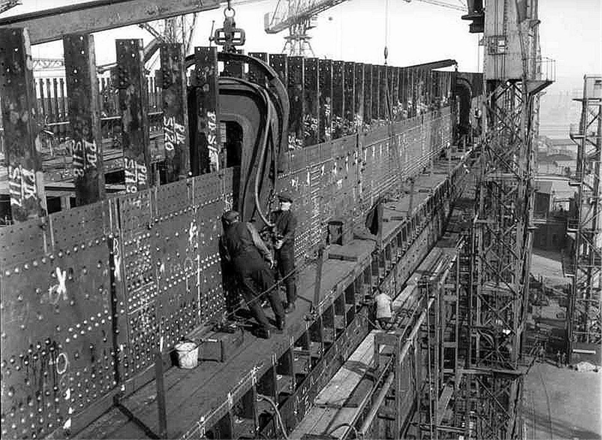
Samples of the hull’s steel plates and the rivets used to connect them were retrieved from the shipwreck between 1991 and 1996 and tested at several laboratories in Canada and USA. All samples were analysed for chemical composition and microstructure, while material extracted from the steel plates was also tested to ascertain its mechanical properties. This included tensile testing at room temperature and fracture toughness testing (using Charpy impact test) over a range of temperatures.
Before I present and discuss the results of testing, it is important to understand the Charpy test and its significance.
How The Charpy Test Works
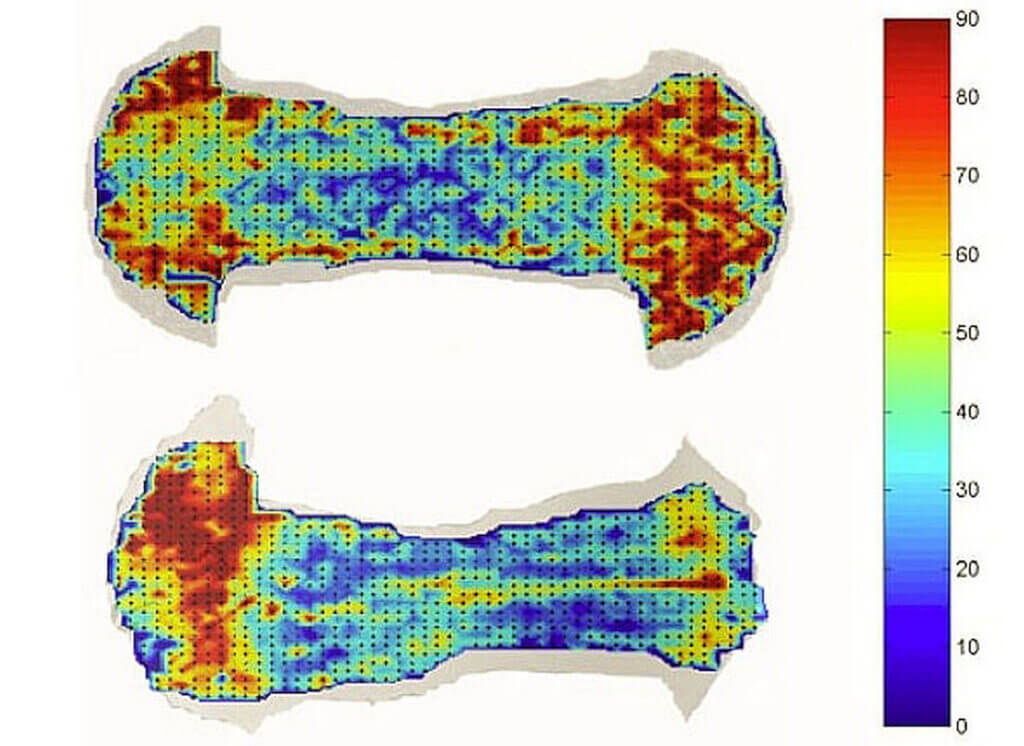
The Charpy test uses a swinging pendulum to impact a sample of standardised dimensions and geometry. This test measures how much of the impact energy (measured in Joules) is required to fracture a material. Tough materials absorb more energy when fracturing because they deform upon impact, whereas brittle materials fracture with little or no deformation, requiring much less energy. In other words, the tougher the material, the more energy is required for it to fracture. The energy threshold separating tough from brittle materials is set at 27 Joules. Metallic materials (including steels) are generally tough, however the energy required for them to fracture decreases as the temperature drops. So, the steel becomes brittle at low temperature, albeit the exact temperature varies depending on the steel grade.
The Importance of The Ductile-to-Brittle Transition Temperature
This leads us to the concept of the Ductile-to-Brittle Transition Temperature (DBTT), the temperature below which a given steel requires less than 27 Joules to fracture upon impact. Essentially, the lower the DBTT, the better. A relatable example is the popular science class experiment where grapes dipped in liquid nitrogen shatter upon impact, i.e. they fracture in brittle manner due to the effect of low temperature.
A number of factors influence the DBTT, but one of the most significant is the microstructure, specifically, the size of the tiny ‘grains’ that make up the material. Finer grains result in tougher materials and hence in lower DBTT. So, the smaller the grains, the better. For steels like those used in the Titanic, the size of the ferrite grains and pearlite colonies³ is particularly important. Additionally, contamination with non-metallic impurities (inclusions), such as slag particles left over from the steelmaking process can increase brittleness and hence raise the DBTT. The higher the content and size of such inclusions, the more brittle the steel.
The Charpy impact test was the first standardised method used to measure fracture toughness of materials and it was comprehensively defined in 1901⁴. Unfortunately, at that time it was only undertaken at room temperature and not widely adopted in the industry until many years later. Low temperature testing and hence determination of the DBTT were only introduced after WWII, following a series of catastrophic failures of Liberty cargo ships used during the war.
Metallurgical Results
The metallurgical results reveal four important points.
The Charpy impact testing conducted in the 1990s revealed that the steel used in the Titanic’s hull plates had a DBTT between +40°C and +70°C, i.e. well above room temperature. For comparison, Dr Foecke’s report included data on a modern equivalent steel with a DBTT as low as ‑15°C (sub‑zero). This indicates that modern steel remains tough at sub-zero temperatures, whereas Titanic’s steel was brittle even above room temperature. Charpy testing at the relevant temperature of -2°C showed that the energy required to fracture Titanic’s steel was approximately 2 Joules, compared to 50 Joules for modern steel. This essentially means that the modern steel is 25 times tougher than Titanic’s steel.
Dr Foecke also carried out the microstructural examination of the steel as a comparative study against a modern equivalent steel. The microphotographs produced using a scanning electron microscope (SEM) showed that the steel used in Titanic’s hull plates had coarser microstructure, i.e. larger grains. The average thickness of pearlite colonies and ferrite grain size were approximately 5‑30µm and 20‑30µm, respectively, compared to 5‑10µm and 10‑15µm in the modern steel. This means that the grains in Titanic’s hull plates were up to 3 times larger, and helps explain the discovered difference in DBTT.
The rivets were made from wrought iron, which contains small amounts of carbon and non-metallic slag in the form of iron silicate inclusions. In early 1900s, when the Titanic was built, wrought iron had a typical slag content of around 2-3%, however, the microstructural analyses of the rivets retrieved from the shipwreck showed a slag content of around 9%, i.e. some 3-4 times the expected value.
Moreover, the rivet shanks fractured transversely (perpendicular) to their axes, while transversely orientated slag inclusions were found in the rivets. This orientation of slag inclusions likely resulted from plastic deformation when the inner heads of the rivets were formed during installation. The presence of such orientated inclusions, especially at low temperatures, made the rivets prone to transverse brittle fracture when subjected to transverse shear. Transverse shear occurs in rivets when a force is applied perpendicular to their shanks.
Metallurgy’s Role in the Titanic Disaster
The metallurgical results clearly indicated that the steel used in Titanic’s hull plates had a high ductile-to-brittle transition temperature (DBTT). It means that the steel could not deform much upon impact and was prone to brittle fracture instead, even at room temperature. This tendency was discovered through ‘post-mortem’ Charpy impact testing and was determined to be greatly amplified at lower temperatures. In fact, at the time when the ship’s hull impacted with the iceberg, with water temperature at approximately -2°C, the steel required very little energy to fracture, as it was around 25 times less fracture resistant than the modern equivalent steel.
As a side note, some metallurgists initially speculated that the brittleness of the steel was caused by excessive sulphur and/or phosphorus content. However, this is not confirmed. Rather, the brittleness resulted from a combination of factors in the steel manufacturing process, predominantly the parameters used during the rolling of the steel at the mill (e.g. temperature, degree of deformation and cooling speed) as well as insufficient content of manganese. These factors resulted in the coarse microstructure (large grains) of the steel, which caused its brittleness.
While the brittleness of the steel was a major factor, the contamination of rivets with slag inclusions cannot be overlooked. Ultimately, the rivets determined the strength of the joints between the steel plates, while the iceberg scored the hull along a riveted joint, which then separated in six areas. As the Titanic’s moving hull scraped the iceberg, the resulting scoring action placed the rivets in the joint under transverse shear stress. Considering that the rivets included three times the typical amount of slag, and were also at the risk of brittle transverse fracture owing to the orientation of slag inclusions, it sealed the fate of the Titanic.
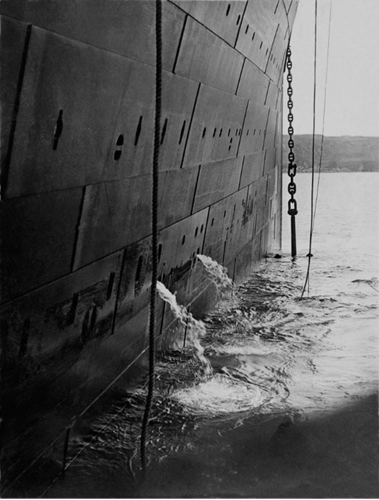
Both the steel plates and rivets, being susceptible to brittle fracture upon impact, rendered the Titanic’s hull prone to fracture rather than deformation, and it was this fracture that caused the riveted joint to separate, which in turn led to water ingress and eventual sinking of the ship.
Had the steel plates and rivets been manufactured using materials with DBTT suitable for cold waters, the hull would have likely sustained a different type of damage. Instead of fracturing, the materials would have deformed in a ductile manner. Consequently, the openings in the riveted joints would be greatly reduced, if any caused at all. In such a case, the water ingress into the hull would have been minimal or none, allowing the Titanic to continue its voyage to the port where the relatively minor damage could be assessed and repaired in the safety of the dry dock, possibly only upon its successful return to Europe.
Summary
While many factors contributed to the Titanic’s collision with the iceberg, it was the metallurgical flaws that ultimately caused the hull to sustain enough damage for the ship to sink. Specifically, it was the coarse microstructure of the steel used in the hull plates and excessive slag contamination in the rivets, which led to the brittle fractures upon impact with the iceberg.
Although Charpy impact testing was introduced in 1901, i.e. before the Titanic’s steel plates and rivets were manufactured, the concept of material brittleness at low temperatures was not fully understood or considered in the ships’ design at that time. It was not until nearly 50 years later that the steelmaking industry adopted the DBTT as a standard for manufacturing tougher (less brittle) and hence safer steels. From this historical perspective, it is clear that the Titanic could not have been deliberately constructed using suitable materials, which might have prevented the disaster.
Modern steels are far less susceptible to this type of failure due to improved manufacturing processes and a deeper understanding of material properties. Had the Titanic been built using modern materials, most likely the collision would not have caused damage beyond its safety margin. The Titanic was designed to stay afloat with up to four flooded compartments, but breaching six proved catastrophic.
It is truly remarkable that careful examination of steel components, retrieved 80 years after the incident from the shipwreck lying 4,000m below the surface of the Atlantic Ocean, provided such transformative perspective on the engineering factors behind one of the history’s most iconic disasters.
It shows the power of Forensic Metallurgy!
About the Author
Jacek joined Hawkins in February 2025 and is an Associate based in our Leeds office, specialising in forensic materials engineering. His expertise spans material and mechanical failures, corrosion, fluid escapes (including water and oil), and personal injury cases across both domestic and industrial environments.
Jacek holds a Master’s degree in Materials Engineering and a European certificate in TIG and MAG welding of low carbon steels. He completed an internship at JFE Steel in Japan, contributing to the development of high-strength micro-alloyed steels for the automotive sector.
Earlier in his career, Jacek worked with several international corporations, playing key roles in product design support, manufacturing process development, and the coordination of EU-funded research initiatives. In 2016, he relocated to the UK to join Honeywell Aerospace as a Materials Engineering Manager. Now working in forensic engineering, Jacek brings a wealth of experience in metallurgy, failure analysis, and industrial processes. Read more about Jaceks professional and educational development here.
If you have a materials failure that you would like Jacek, or any of our materials engineers to investigate, please get in touch
¹Metallurgy of the RMS Titanic, Foecke, T. (1998), NIST Interagency/Internal Report (NISTIR), National Institute of Standards and Technology, Gaithersburg, MD.
² Ferrite is a common constituent (or metallurgical phase) in steels, characterised with low carbon content, low hardness, high ductility and it is often referred to as alpha-iron (α‑Fe).
³ Pearlite is a common 2‑phase structure in steels, comprising alternating layers of ferrite and cementite. Cementite is a type of iron carbide identified with chemical formula Fe₃C.
⁴ Charpy impact testing later became part of the ASTM E23-33T standard that was published in 1933.