 Italiano
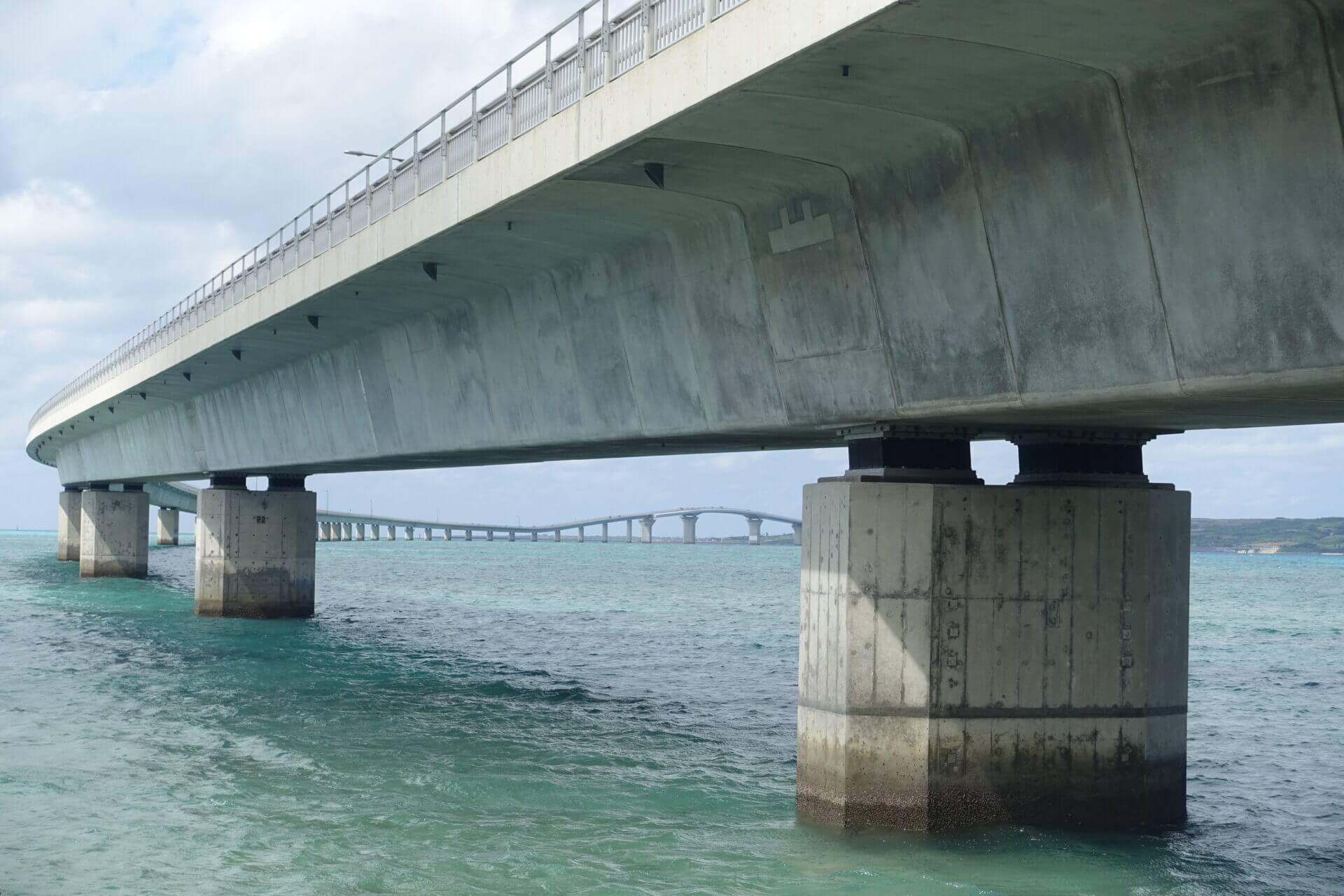

Bridges play a vital role in our daily lives by connecting areas separated by natural or man-made barriers, enabling efficient transportation and access. China has over 1 million bridges (CEIC, 2023), and Hong Kong alone currently has 1475 flyovers and road bridges (Highways Department, 2025). Each bridge contributes to ensuring smooth traffic flow and supporting daily commutes.
Bridges are typically designed to last more than 100 years; therefore, ensuring long-term performance is critical. Every year, billions of dollars are allocated to maintaining bridges worldwide and this figure is expected to rise as new bridges are constructed and existing ones age. A well-designed and properly maintained bridge will contribute to both its durability and reduced maintenance costs.
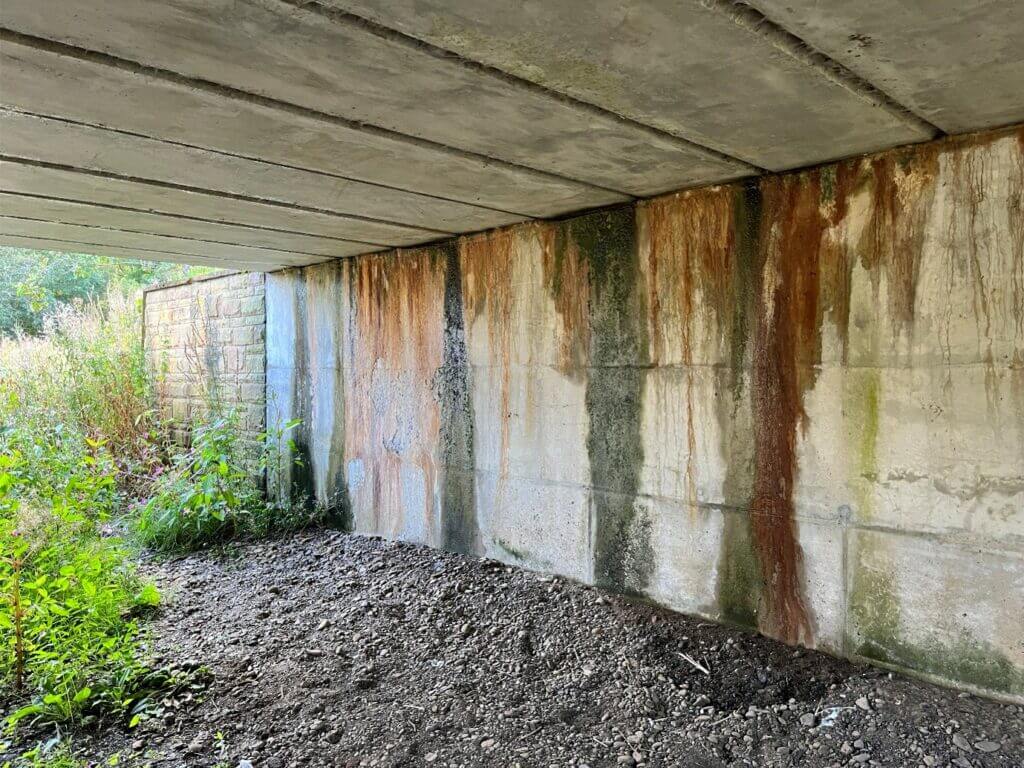
Among the many aspects of a bridge structure, stormwater management is particularly crucial. Poorly designed, installed, or maintained drainage systems can lead to water accumulation in undesirable areas, accelerating the deterioration of structural components and creating safety hazards for users and the surrounding environment, as shown in Figure 1. Effective drainage design and maintenance not only extend a bridge’s lifespan, but also reduce overall operational costs and improve safety.
This article provides an overview of stormwater management in bridge structures, with a particular focus on surface runoff control in concrete bridges and its role in ensuring structural safety and long-term durability. References to established design standards, including the UK’s Design Manual for Roads and Bridges (DMRB) and the Hong Kong Structures Design Manual 2013 (HKSDM2013), are included where applicable to illustrate best practices and regulatory guidance.
Discussion
Stormwater on a bridge is generally managed through four key methods: Structural Elements, Deck Drainage, Waterproofing Membranes, and Watertight Joints.
1. Structural Design
During the design stage, structural engineers and architects have the opportunity to incorporate strategies into the bridge geometry, surface shaping, and reinforcement detailing to minimise stormwater accumulation, often at little or no additional cost.
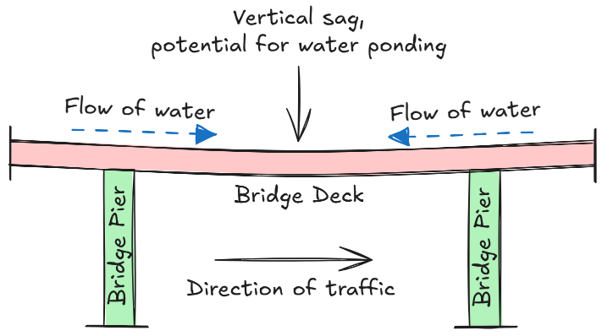
> Bridge geometry should ideally prevent standing water or ponding by incorporated appropriate longitudinal and transverse deck gradients. The UK’s DMRB-CD358 recommends a minimum longitudinal gradient of 1:100. Unfavourable geometries, such as vertical sags (Figure 2), can lead to water accumulation and should be avoided whenever possible. Where they are unavoidable, special attention to drainage and detailing is required.
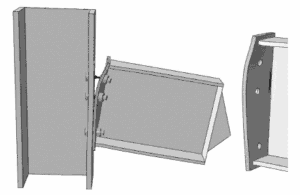
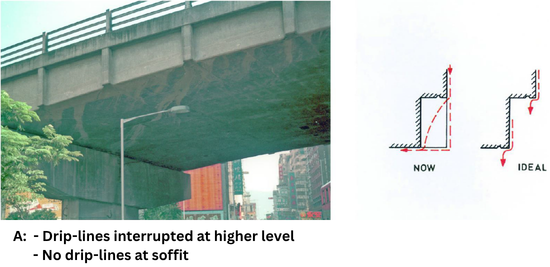
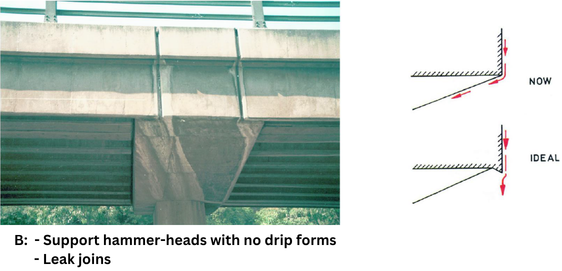
> Structural shape plays a key role in stormwater management. Sloping the surface finish, such as on the bridge deck and bearing seat areas, helps prevent standing water by allowing it to flow naturally out of the horizontal surface towards designated drainage points. Drip edges and grooves are also important, as they help direct water away from structural surfaces. HKSDM2013 provides visual examples of both effective and poor practices for designing drip edges and grooves (see Figure 3). Any gaps exposed to stormwater should be avoided or properly sealed.
> Reinforcement detailing: Design codes and standards typically require crack width calculation to ensure that the size, number, and spacing of reinforcement bars are appropriate. This helps prevent excessive cracking from forming during the service, which could otherwise allow water to penetrate the concrete more rapidly and accelerate deterioration.
2. Deck Drainage
The deck drainage system consists of the intake, the drainpipes, and the outlet. Stormwater enters through the intake and is delivered through the drainpipes all the way to the outlet, where it connects to a local drainage system or natural water body. Poor design and maintenance can lead to several problems:
> Inadequate drainage design: Insufficient drainage capacity can lead to water build-up during heavy rainfall, leading to overflow into unwanted areas. This creates hazards for users and the surrounding environment. Incorporating drainage design from the early stages of bridge design is essential to achieve effective drainage.
> Blockages: Debris carried by stormwater can cause blockages, so drainage systems should be designed for ease of maintenance. Regular inspection routines are also crucial to ensure issues are identified and resolved promptly.
> Unsuitable materials: The material chosen should be durable and require minimal maintenance. Design codes often specify suitable material types. For example, HKSDM2013 requires the use of Unplasticized Polyvinyl Chloride (uPVC) for drainpipes in Hong Kong.
3. Waterproofing Membrane
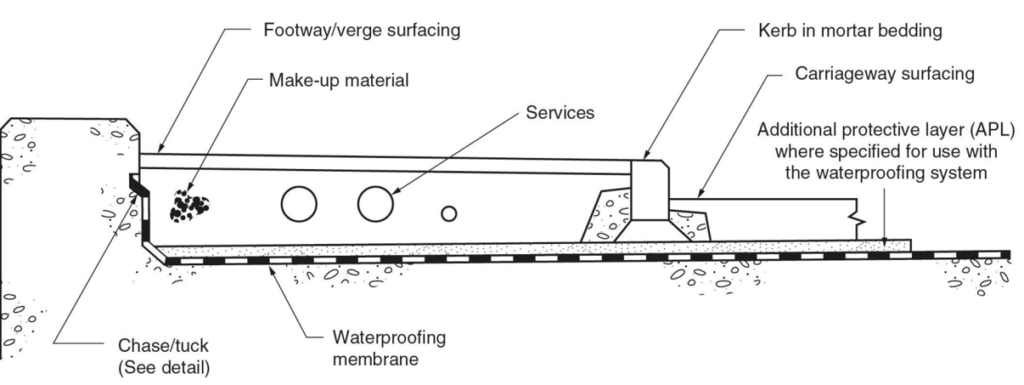
A waterproofing membrane is an additional impervious layer, typically made of bitumen, polymer, or cementitious materials, applied over the bridge deck to prevent direct water ingress. Selecting the appropriate material for each specific project is crucial to ensure effective waterproofing.
These membranes can be applied in different forms, such as liquid, sheet, or spray. It is essential to adhere to relevant design codes when applying waterproofing to ensure long term effectiveness. Improper application can lead to issues such as insufficient bond strength, leakage due to poor detailing, and damage due to construction activities.
4. Watertight Joint
In modern bridge design, continuous bridges are increasingly favoured over simply supported designs. This shift is largely due to the risks associated with bridge joints, which are prone to leakage, deterioration, and high maintenance demands. Modern design codes such as HKSDM2013 and DMRB CD350 include clauses encouraging designers to minimise joints wherever feasible.
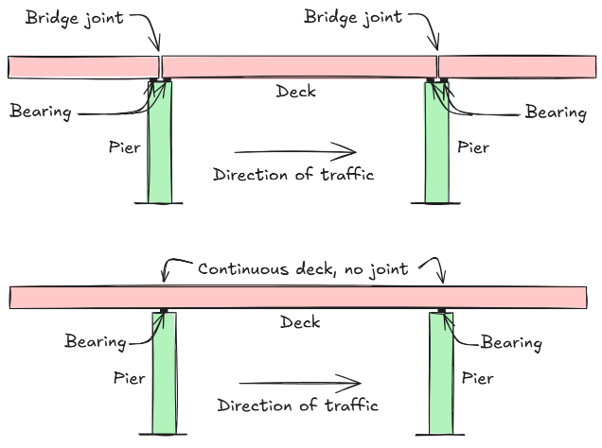
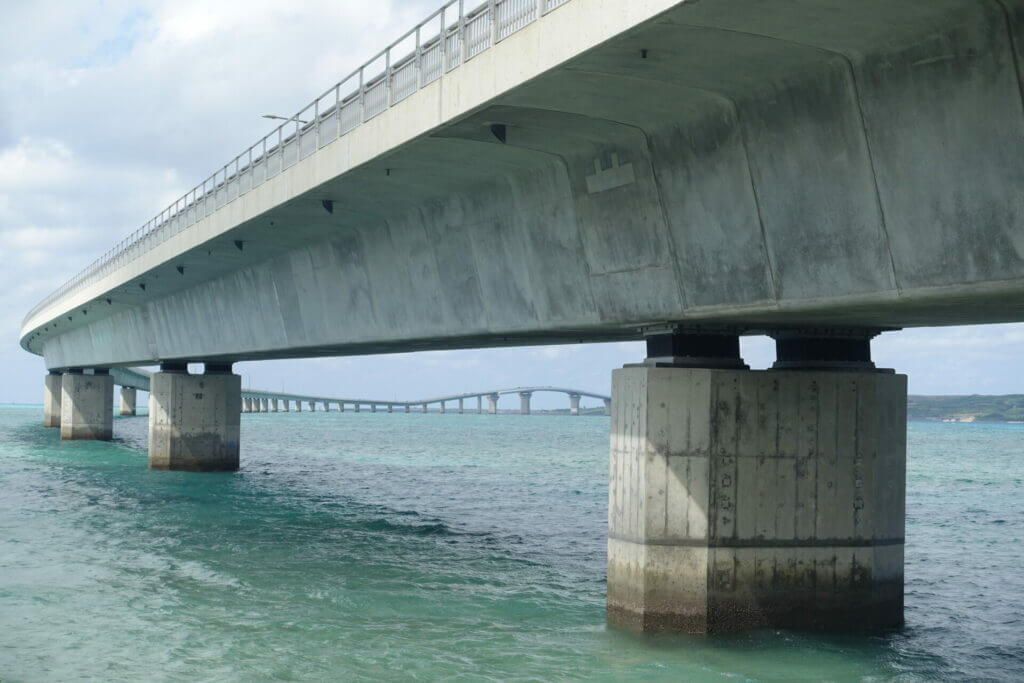
In certain circumstances, joints might be unavoidable, for example monolithic connection at abutments or when connecting new structures to existing ones. Such cases present their own challenges, and using a movement joint can be a safer and more economical design choice. In these cases, joints must be fully watertight, and access for maintenance must be considered in the joint design.
Joint watertightness can be achieved through, proprietary watertight movement joints or integrating drainage systems within the joint. If joints are not watertight, accumulated water can lead to:
- Bearing deterioration
- Concrete surface damage on bearing seats due to ponding
- Reinforcement corrosion on piers and abutments, ranging from minor staining to significant structural damage
Role of Technology in Bridge Drainage Maintenance
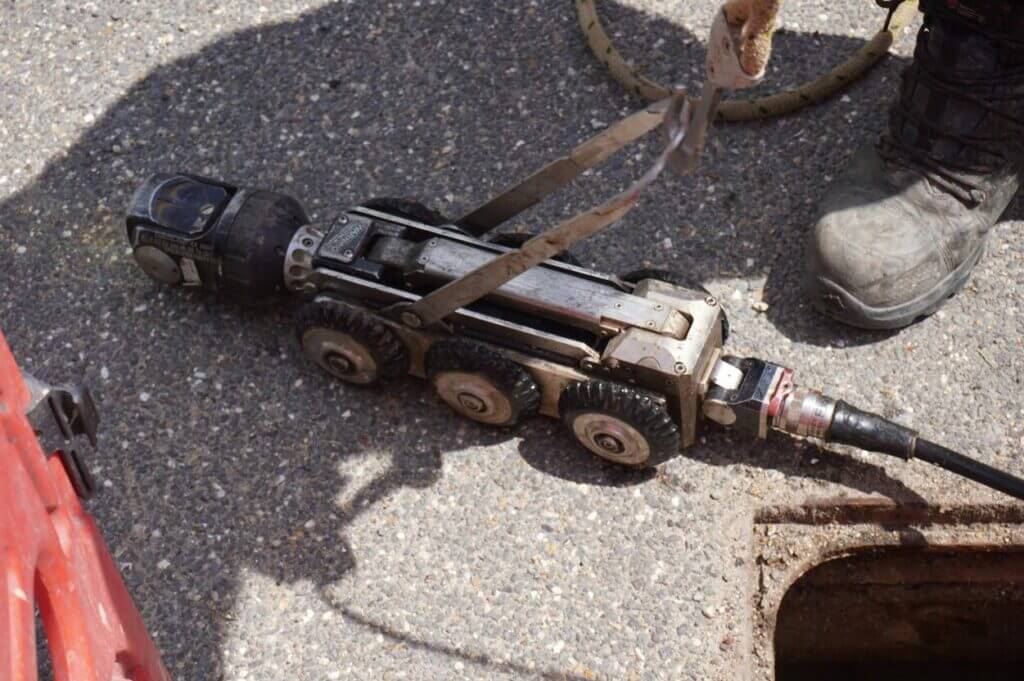
Maintaining drainage systems on bridges can be labour and cost intensive, especially for long bridges spanning challenging terrains such as seas or valleys. The use of modern technologies can improve safety, enhance maintenance quality, and reduce operational costs. For example, CCTV cameras installed on bridges allow personnel to inspect drainage inlets and identify surface blockages or flooding without the need of road closures or traffic diversions. Drones and drain inspection cameras (Figure 7) can inspect hard-to-reach locations, such as drainpipes running at the underside of the bridge. Various sensors (flow, pressure, moisture, etc.) combined with artificial intelligence have the potential to support real-time monitoring, early detection of anomalies, and predictive maintenance planning. These approaches reduce the likelihood of sudden failures and help maintenance teams respond proactively.
Final Remarks
Stormwater management on bridges is a well-established aspect of bridge design, addressed by various design standards such as HKSDM2013 and DMRB. Adhering to these guidelines when designing both the structure and the drainage system results in more durable, reliable and cost effective bridges. In summary, stormwater management on bridge is achieved through:
- Structural design: bridge geometry, element shape, and reinforcement detailing.
- Good deck drainage system design and maintenance.
- Application of appropriate waterproofing membranes.
- Provision of watertight joints and minimisation of joints where possible.
Technologies such as CCTVs, drones, inspection cameras, and smart sensors powered by AI are increasingly important for improving the safety, quality, and cost-effectiveness of bridge drainage maintenance. These tools enable remote inspections, real-time monitoring, and predictive analysis making them particularly valuable for long bridges spanning challenging terrains.
About the Author
Eng Phin is a structural engineer with over 10 years of experience in bridge and building design. He began his career in Indonesia, contributing to major bridge projects such as the Semanggi Interchange Upgrade and Kualanamu Light Rail Transit system. His expertise spans modern bridge construction methods, temporary works, and post-tensioning.
He has since worked on international projects in Hong Kong and beyond, applying local and global design standards while promoting digital engineering in structural design.